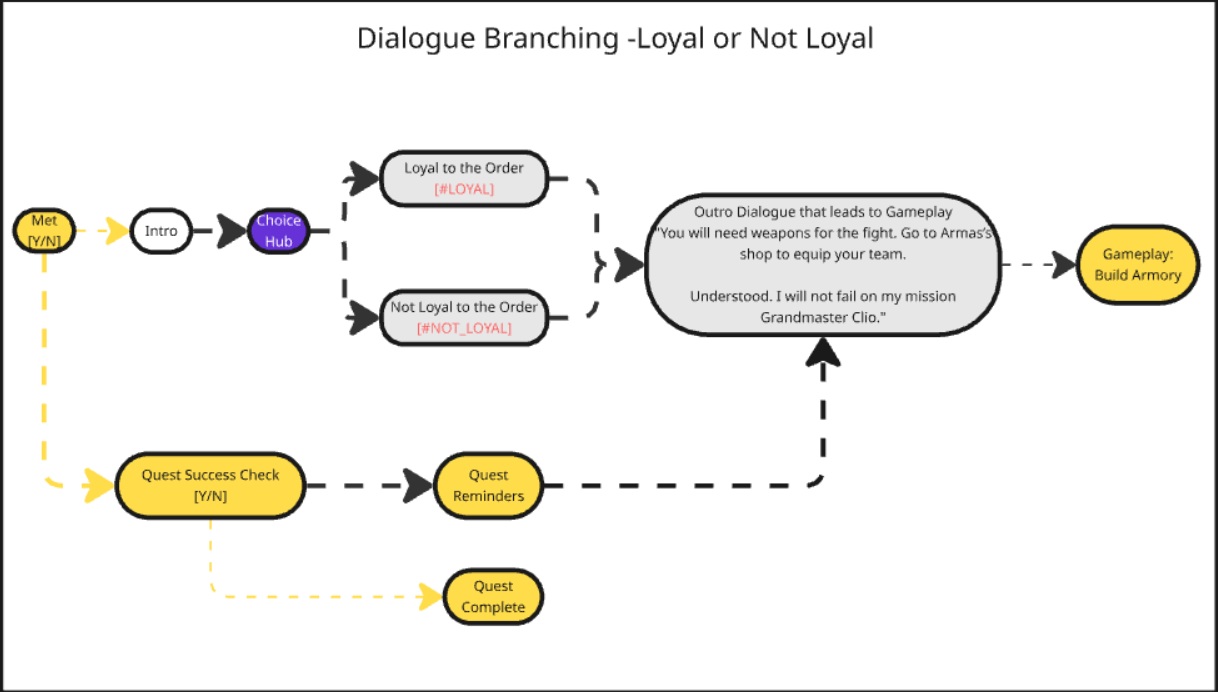
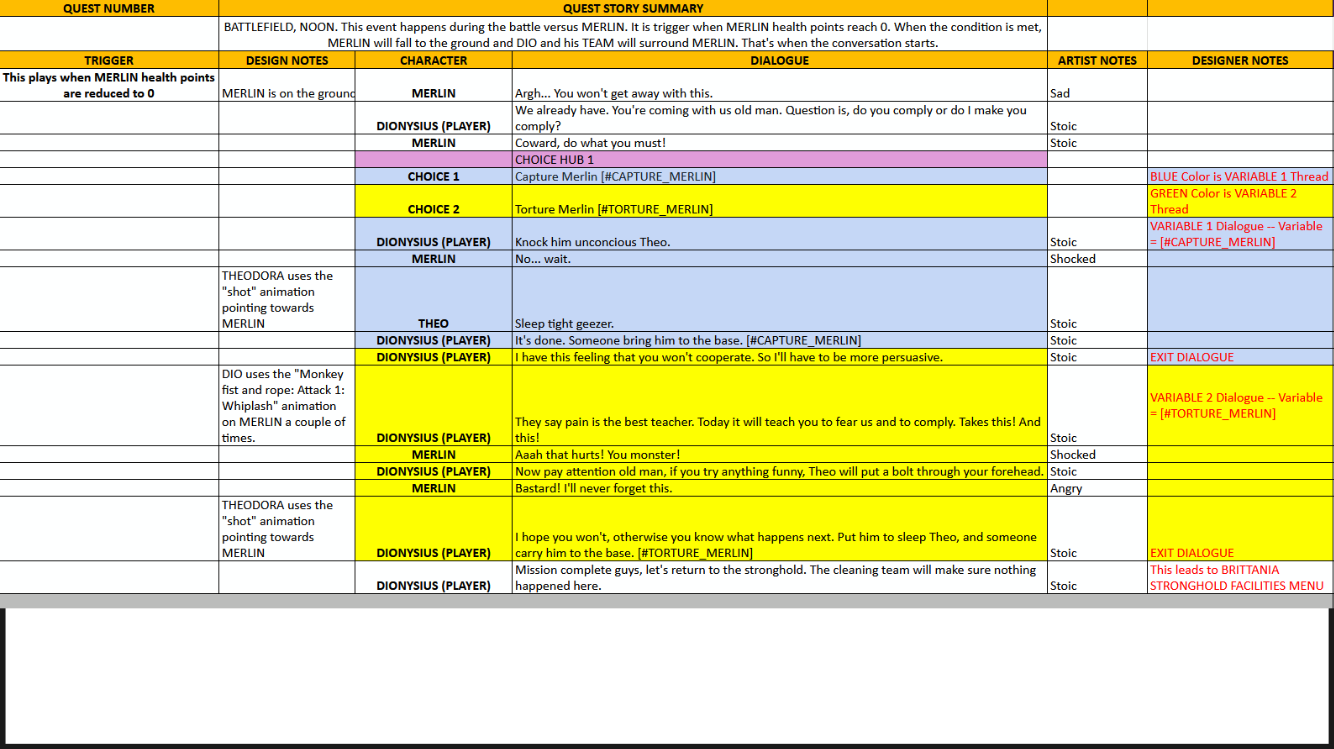
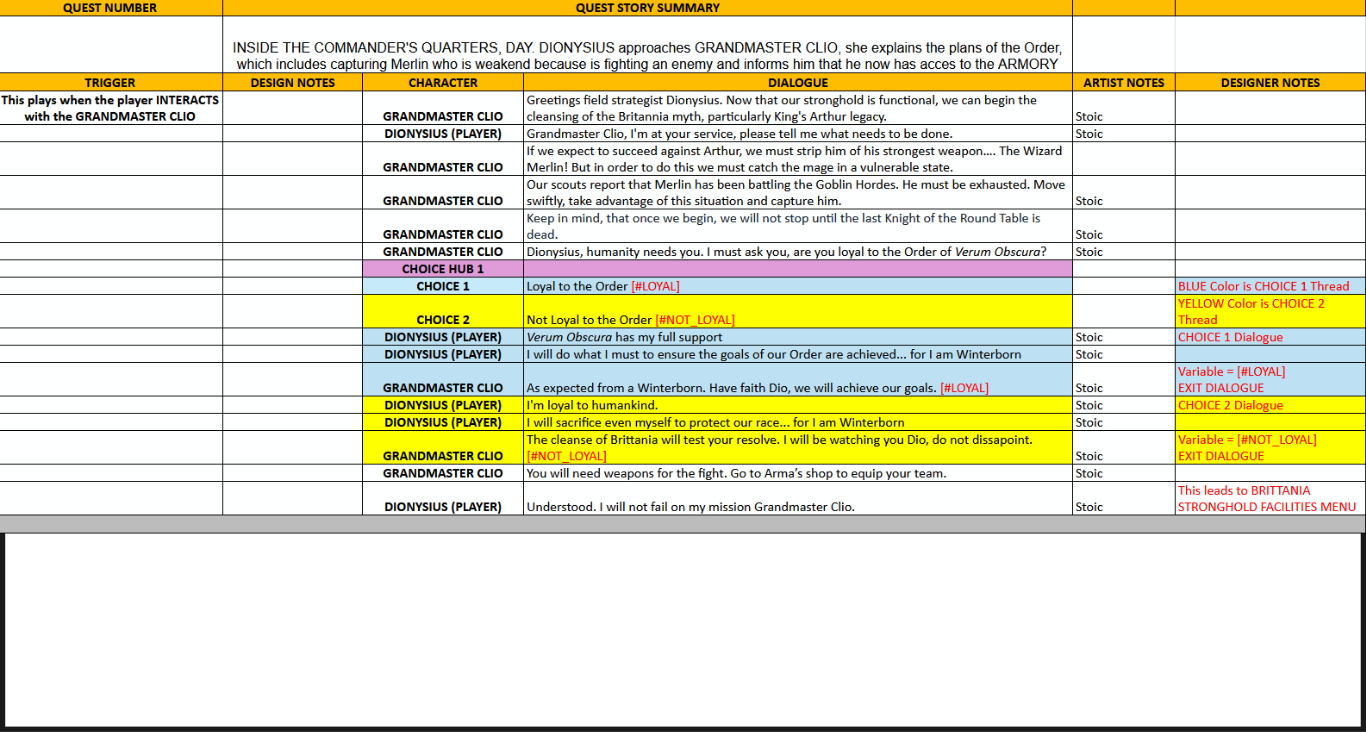
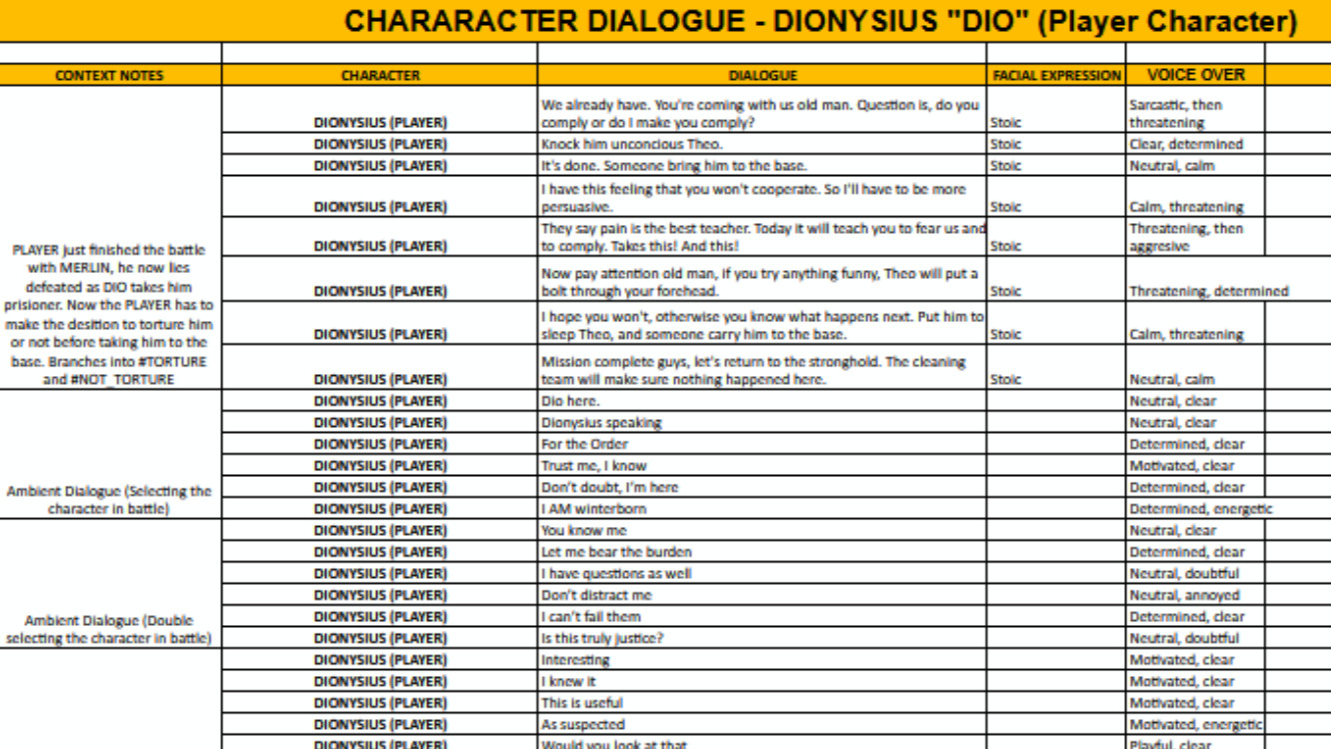
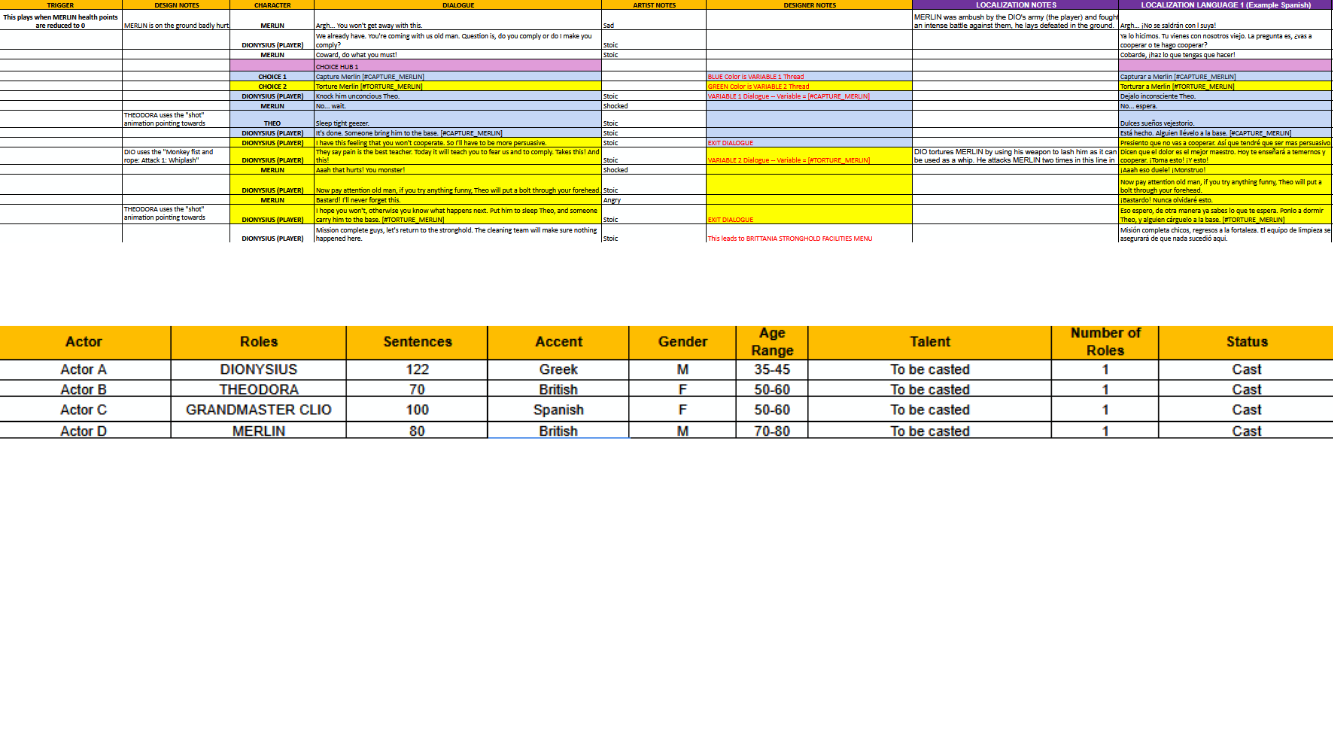
Designed a dynamic branching dialogue system that gives players multiple choices to influence the outcome of a scene. The dialogue responds to the players choices and actions and creates new interactions in real-time gameplay settings.
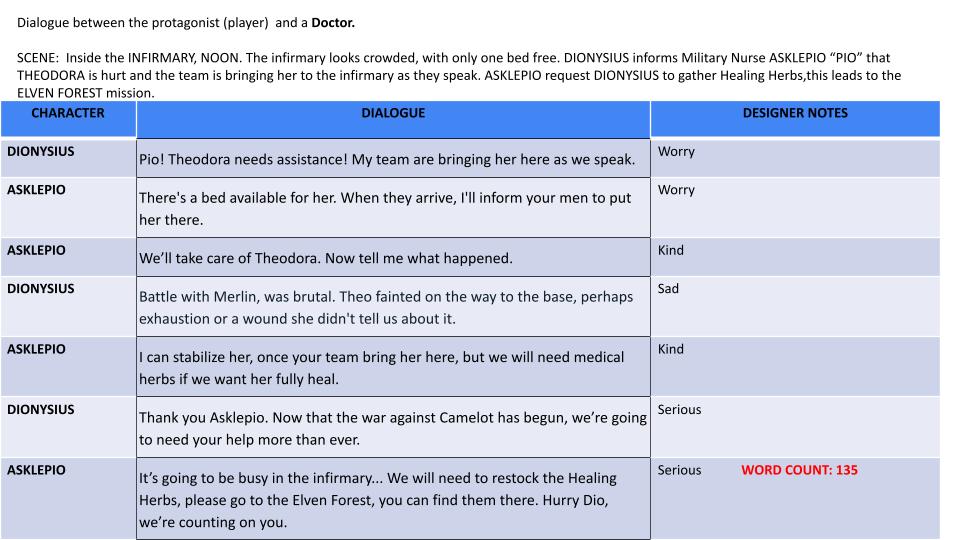
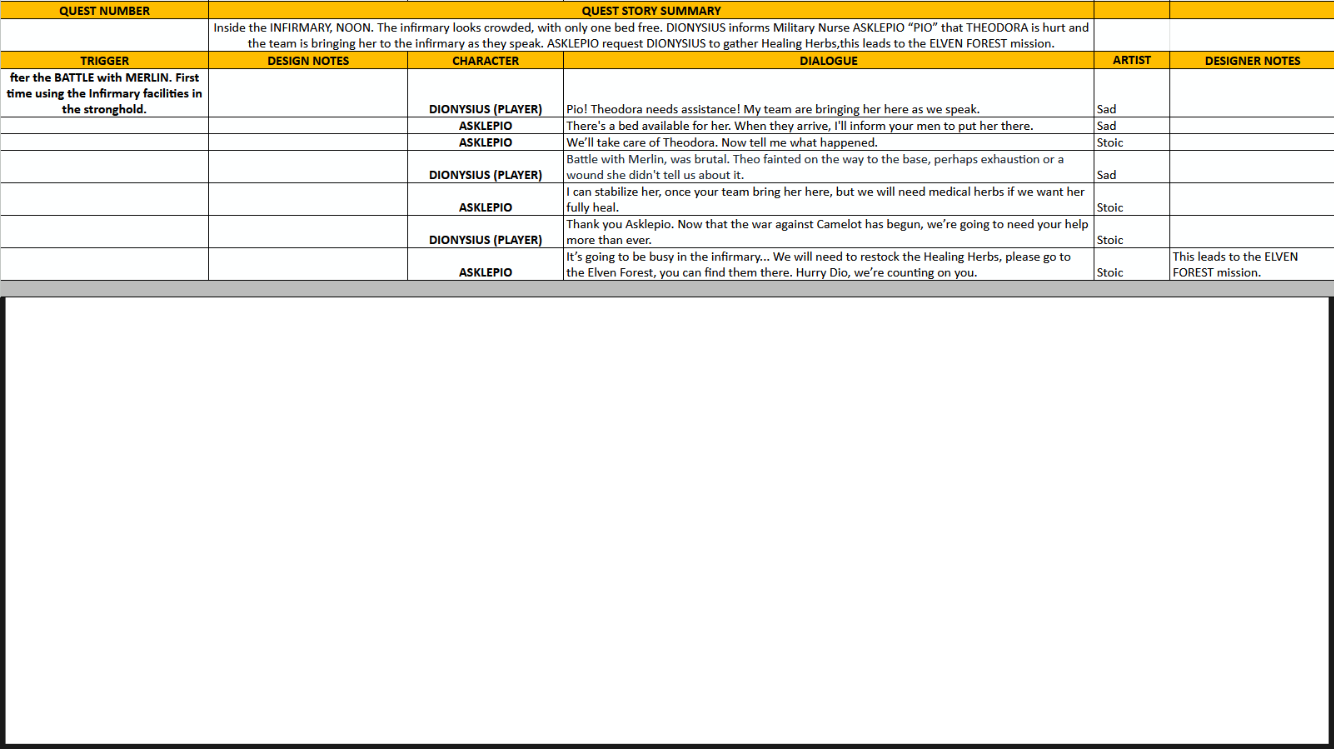
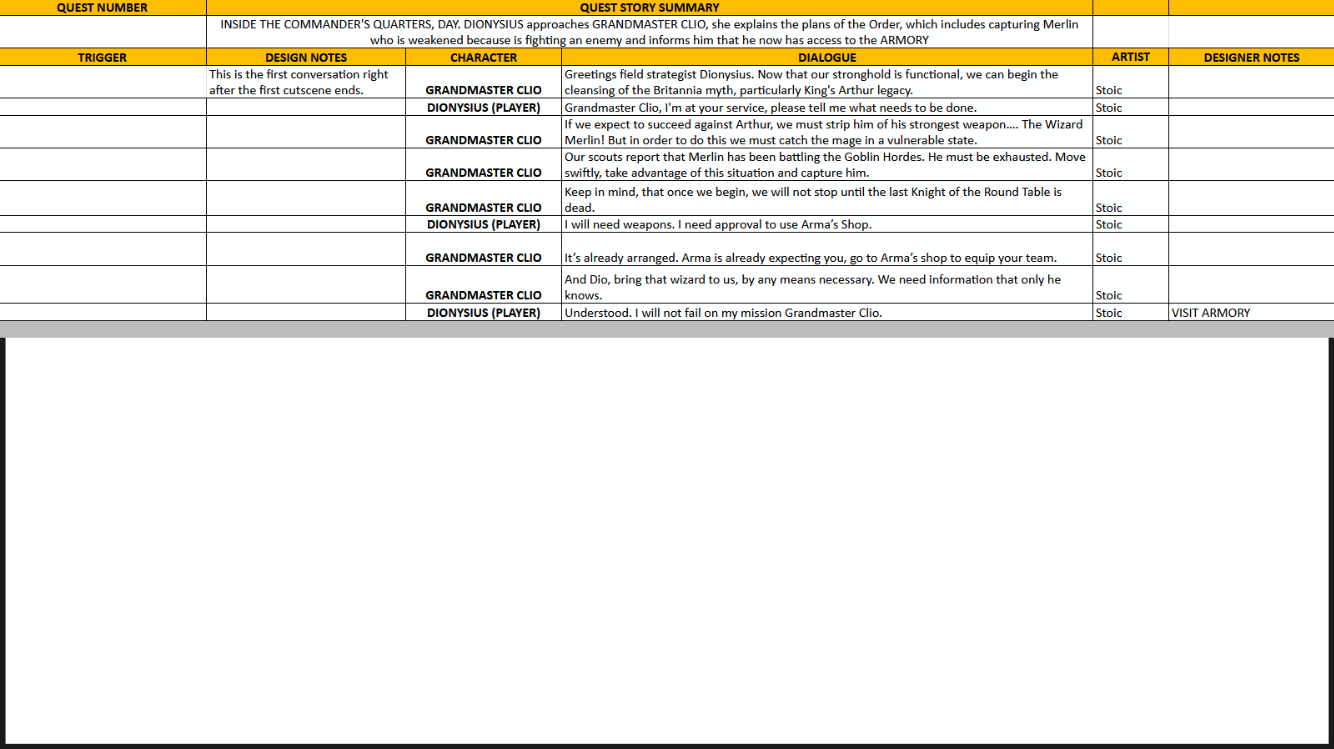
Designed an engaging linear dialogue of an introductory quest series presenting foundational mechanics: use of the Armory facility, battle, healing.
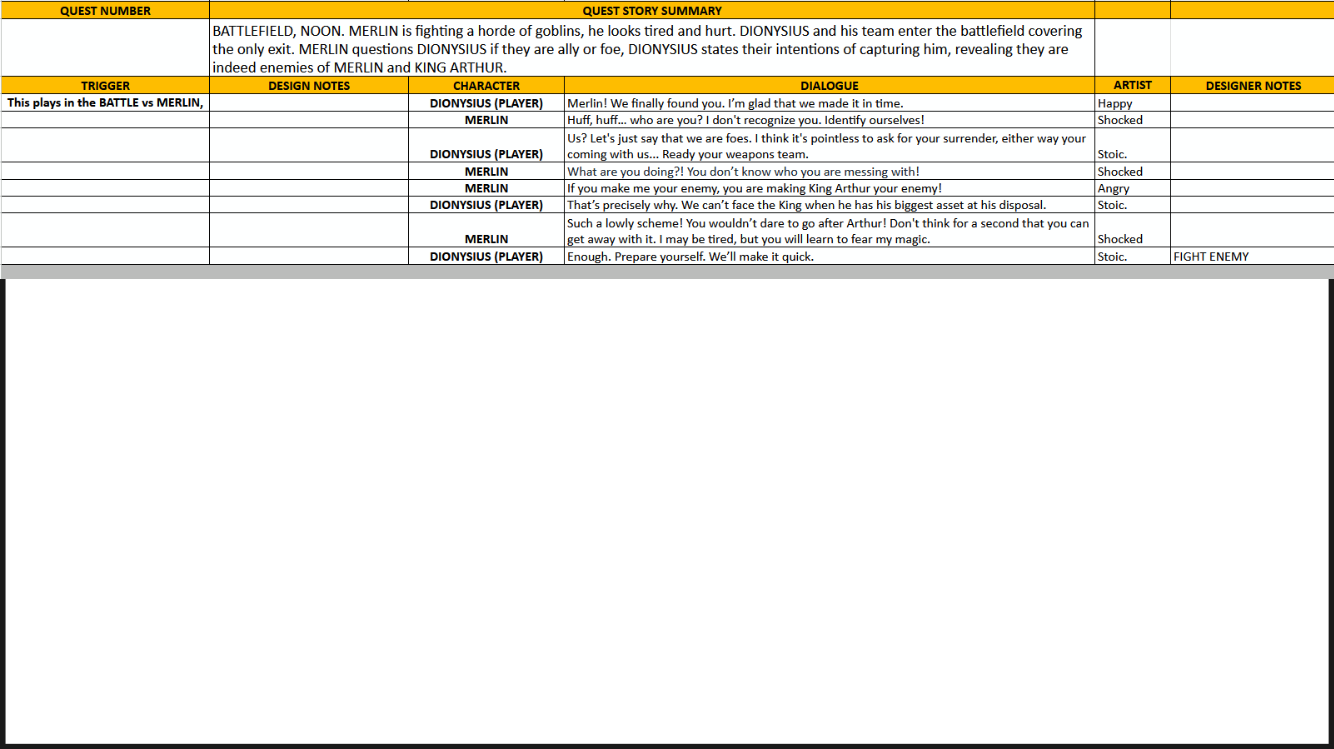
Focus on character interaction and lore allows the player to get fully immersed and acquire the first impression of the setting, the main goals and conflicts the player will face in the rest of the game.
Dialogue is designed to portray the dramatic tension of the story giving an accurate feel of the gravity of the events that are unfolding in the story of the game.
Character Design & Barks
Player Character
Field Strategist: Dio
Design
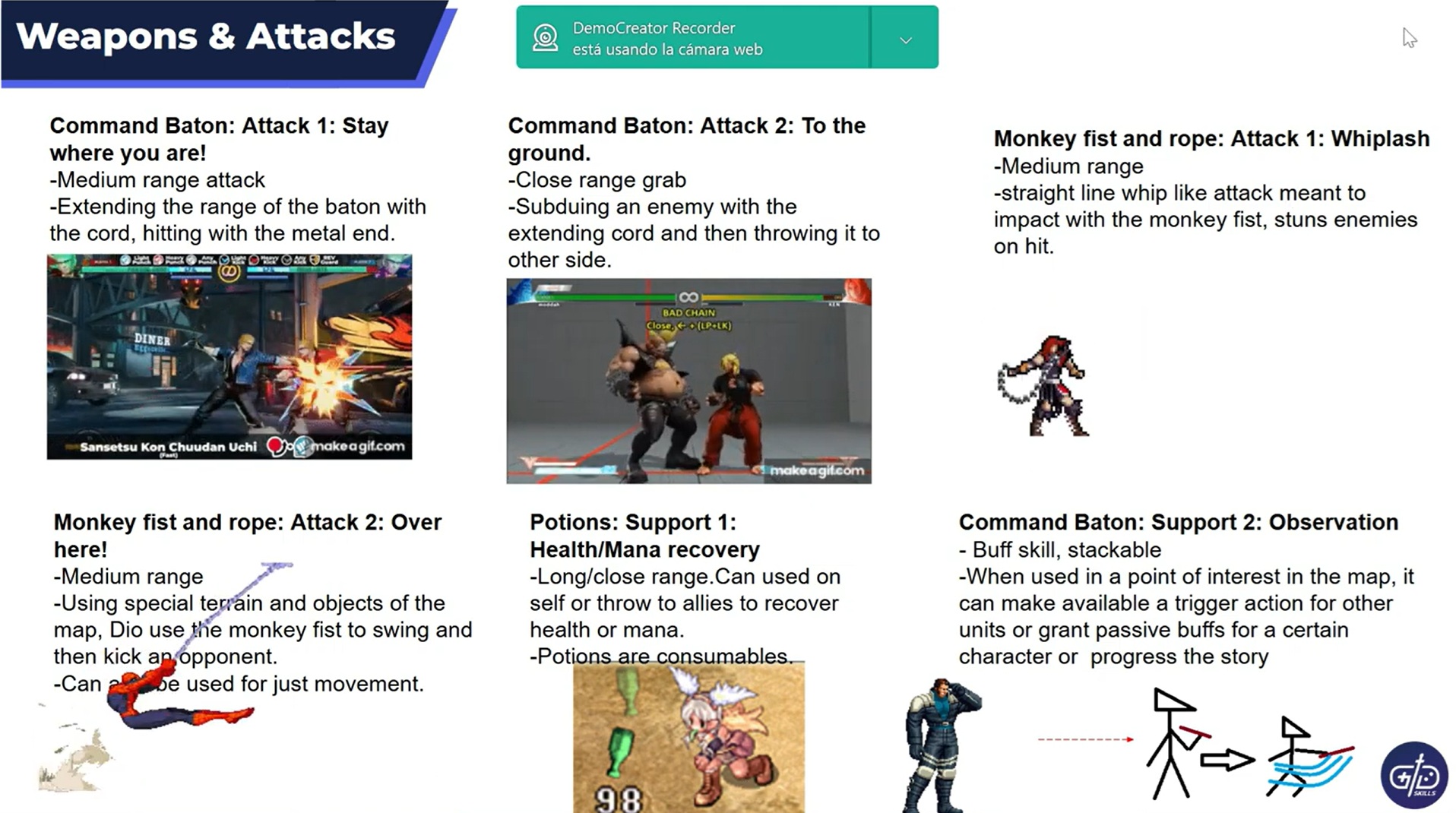
Weapons
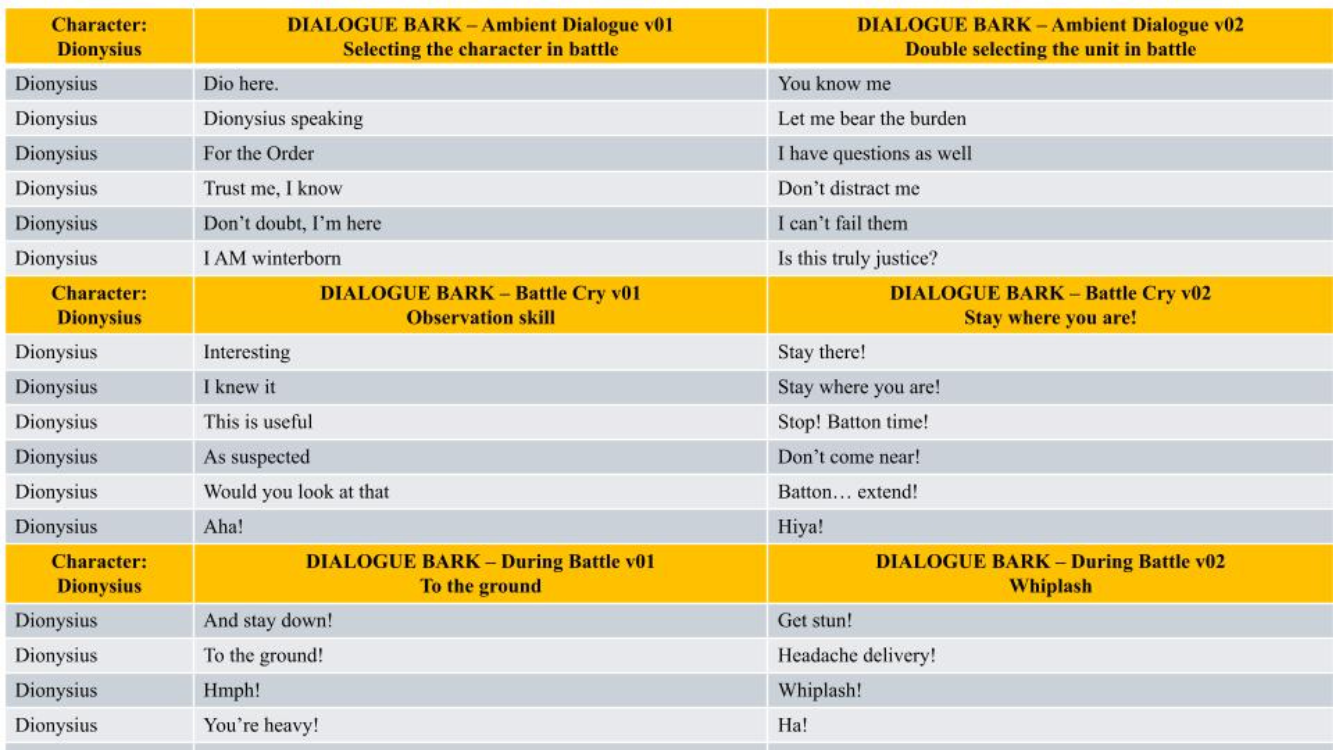
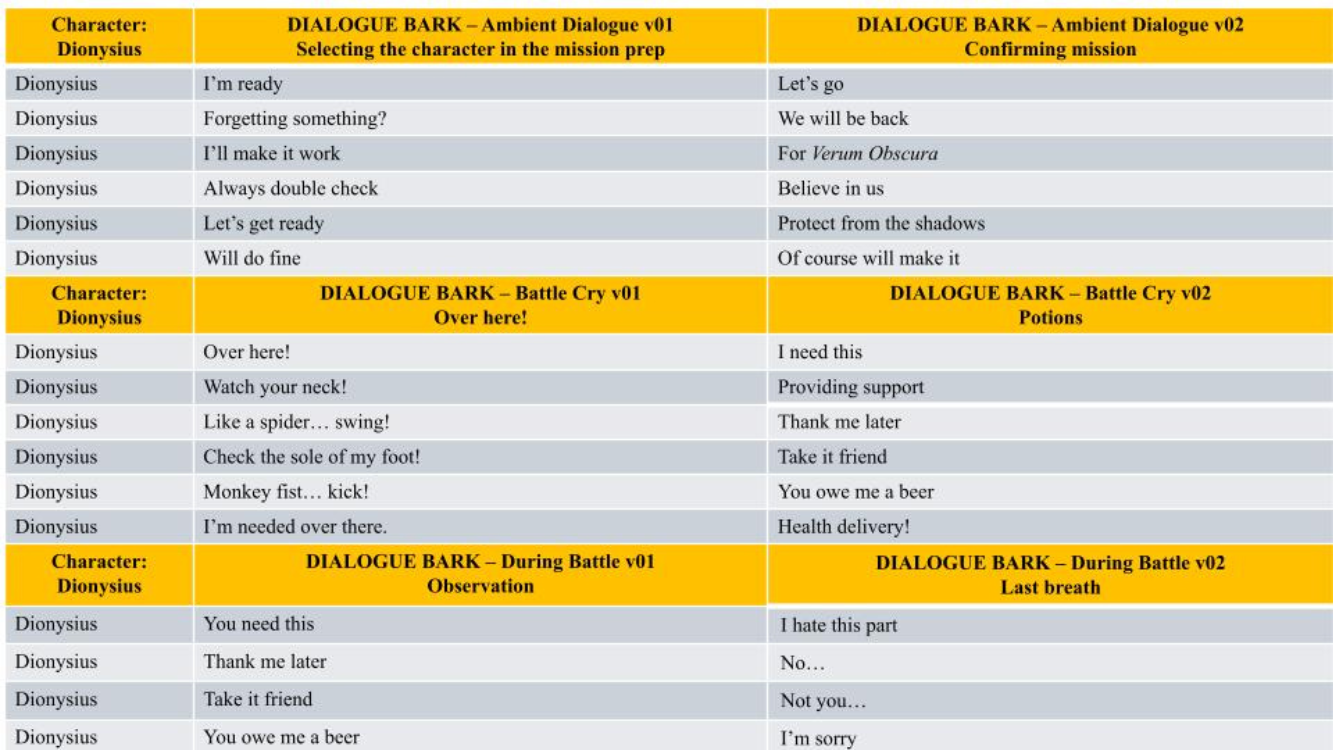
Barks
Attacks
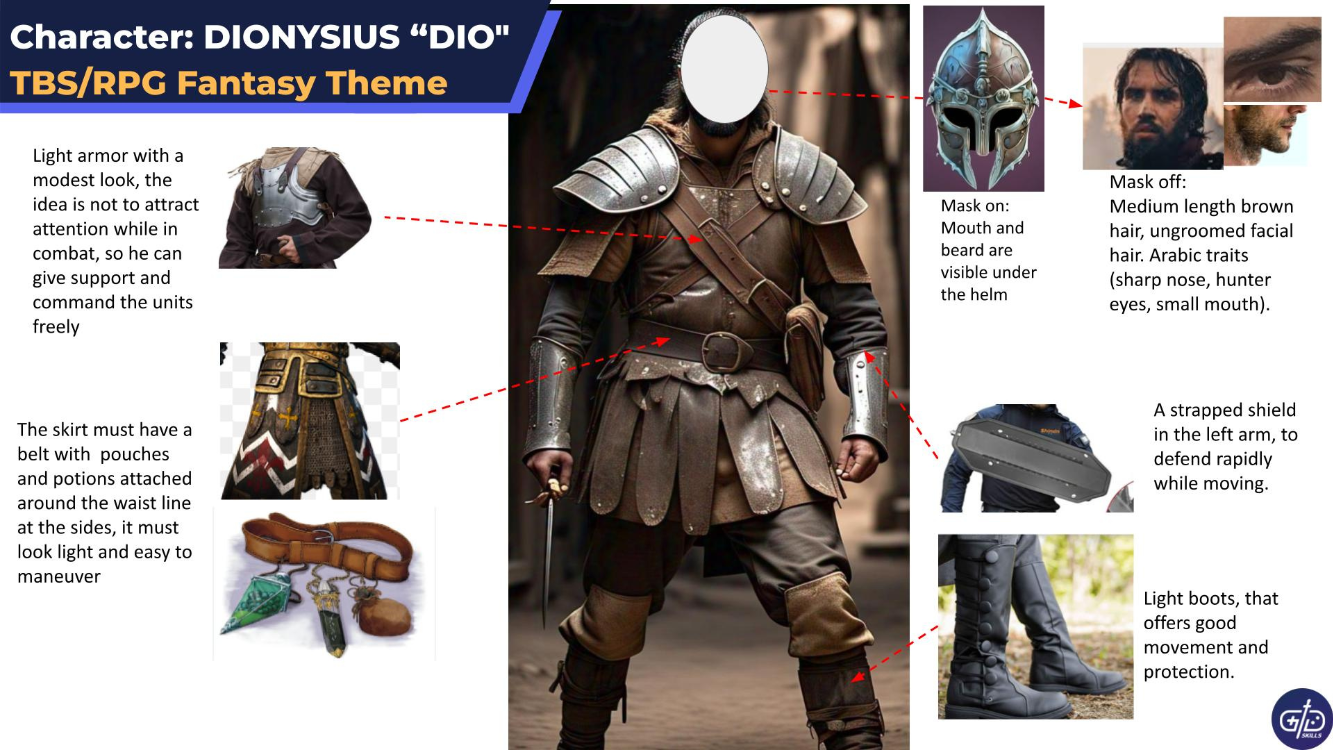
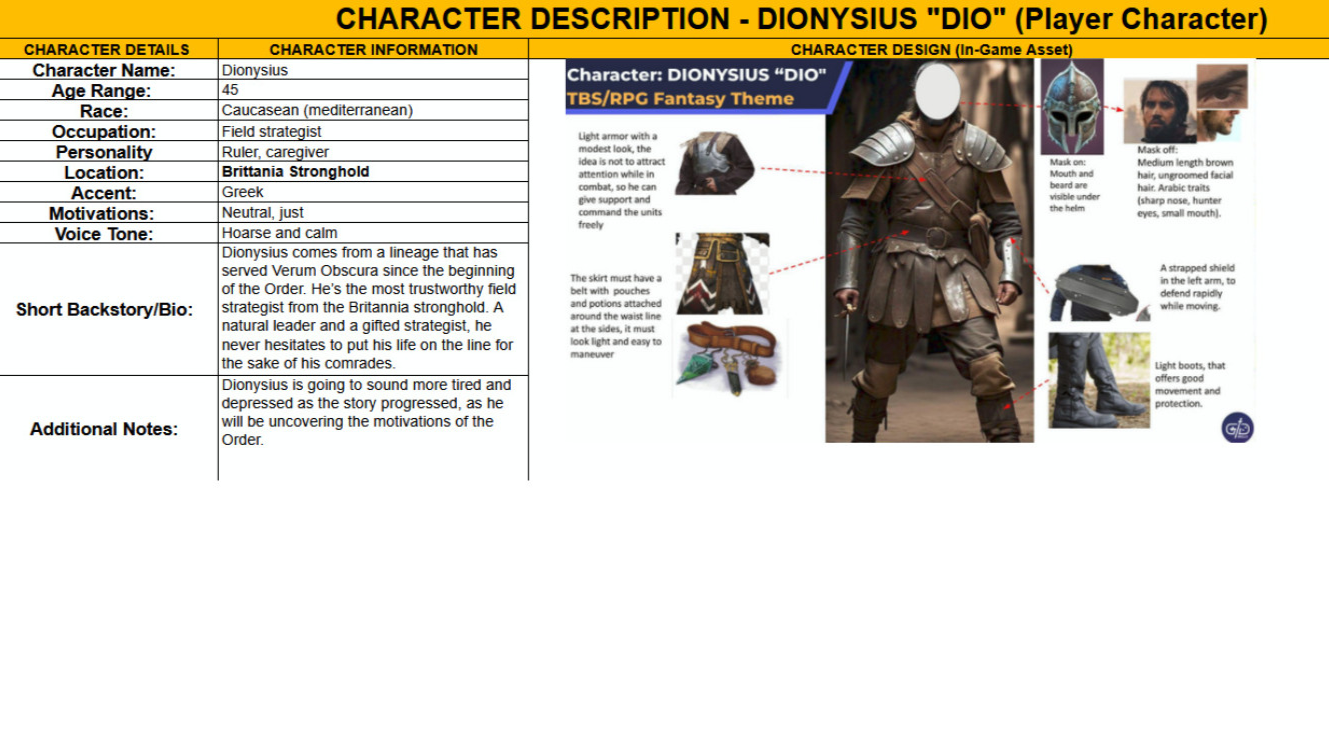
I designed Dionysius (Dio) as the main playable character a compelling character with unique backstory, motivations and growth arcs that resonate with the player through the game.
As the Field Strategist, Dio’s involvement in the conflict is direct and provides unique perspectives for the development of the game story, as well as unique approaches to the battles and conflicts that transpire.
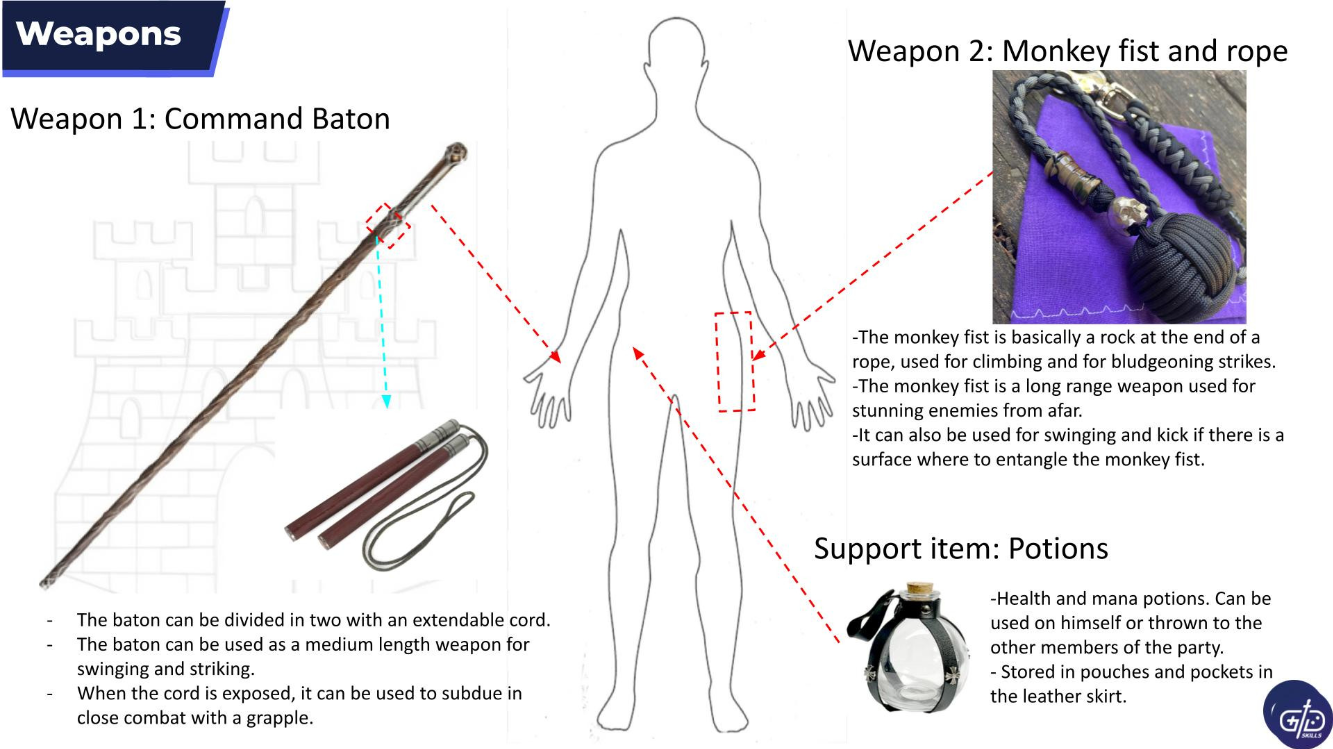
The aesthetic of Dio’s design and weaponry portrays a dynamic but practical style, that reflects his personality and the Order’s theme.
Dio’s background provides motivation for protecting his bonds with his teammates and the Order, while his ideals clash him with the objectives of the Order. Creating personal conflict to the story and unpredictable turn of events.
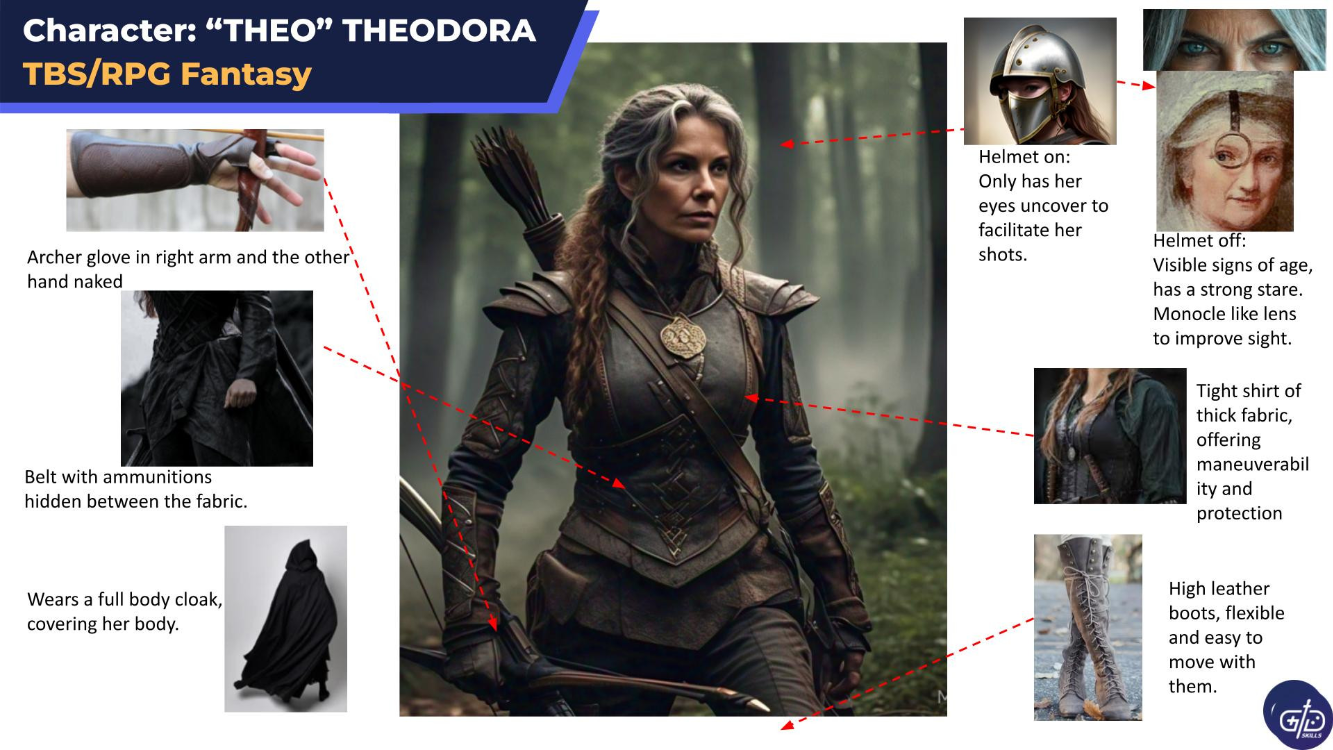
Ally NPC: Sharpshooter: Theo
Design
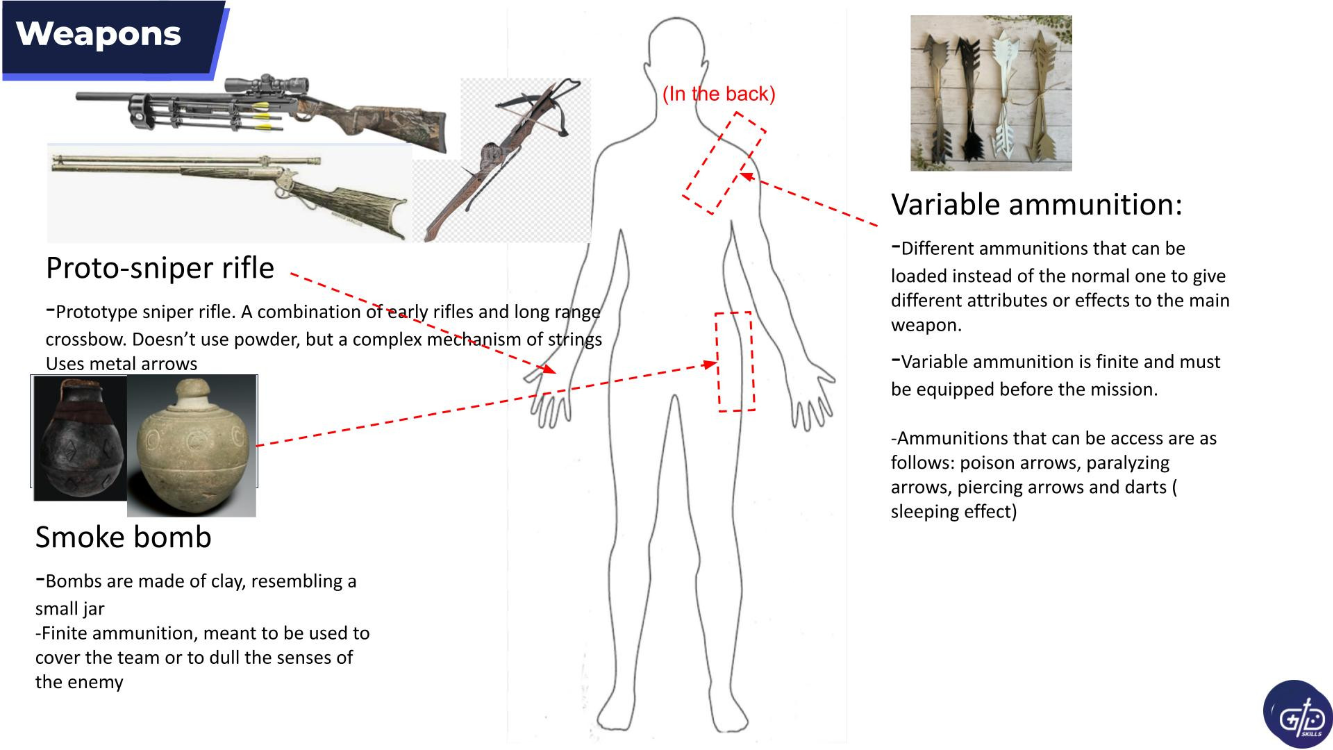
Weapons
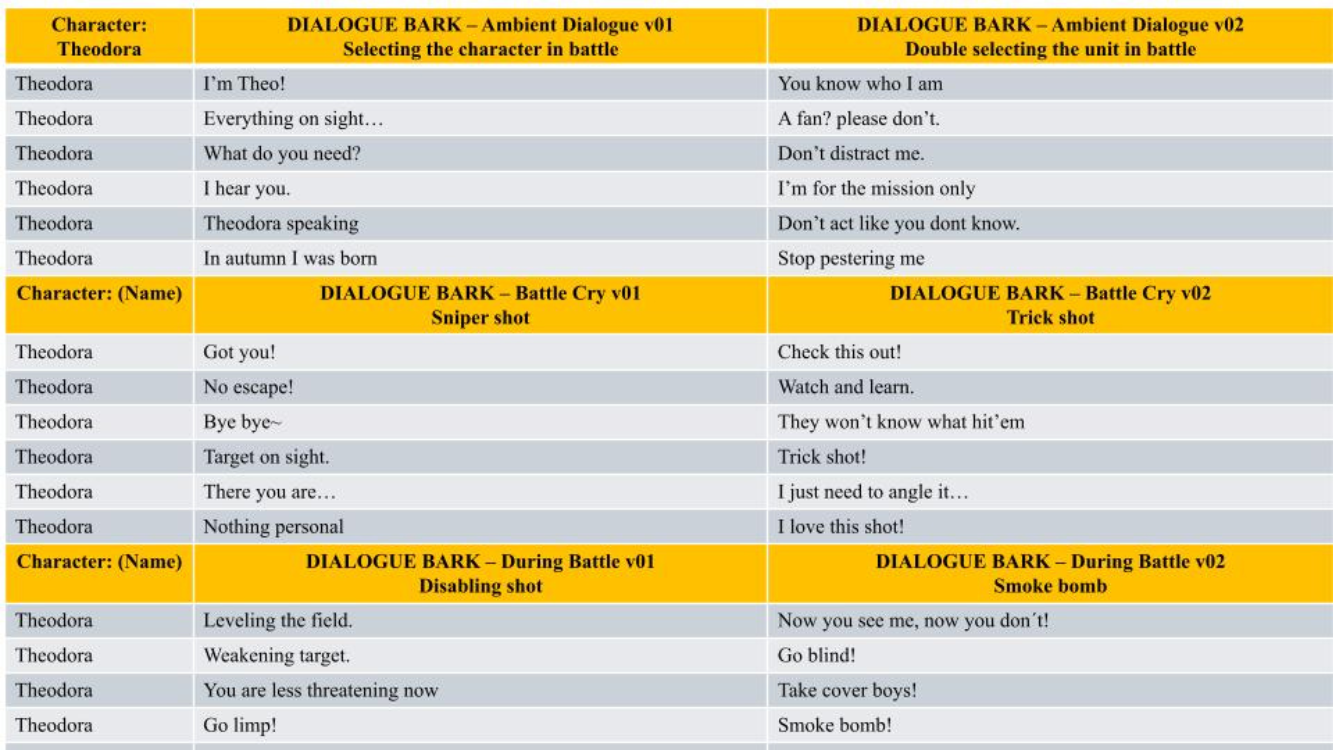
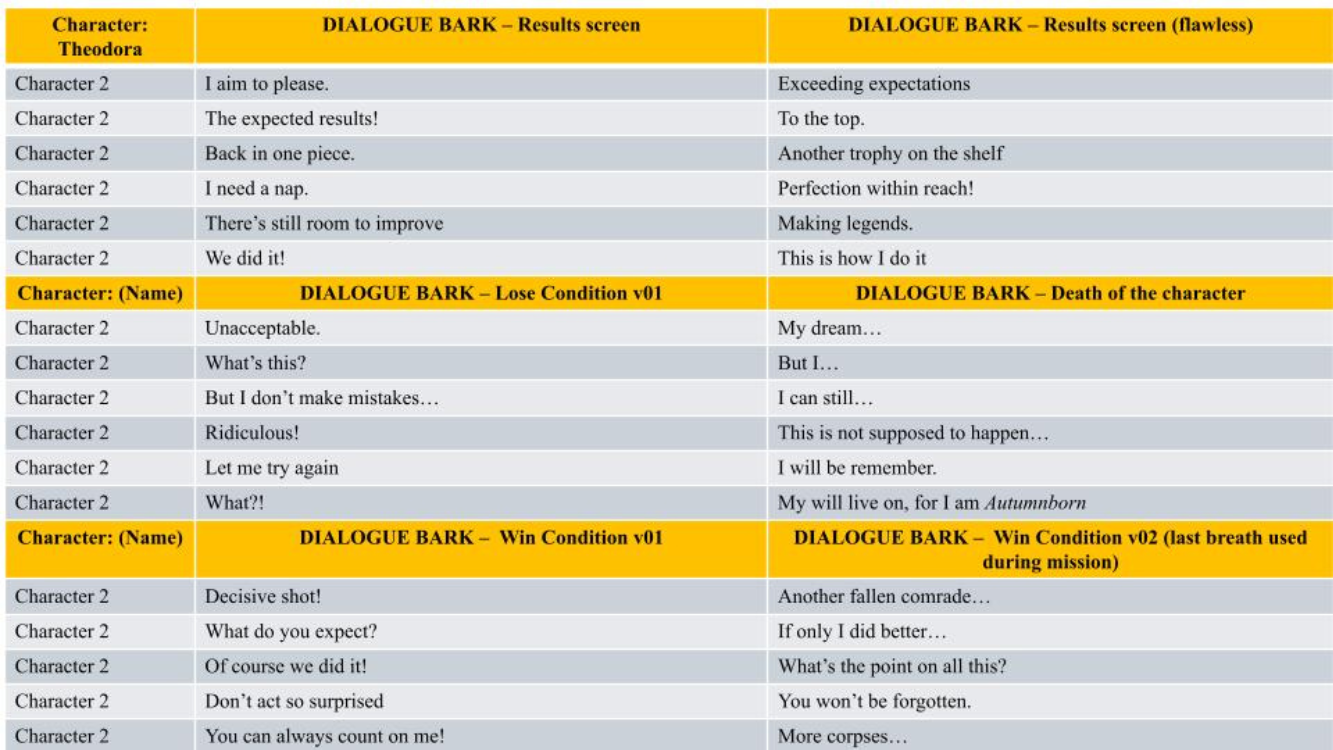
Barks
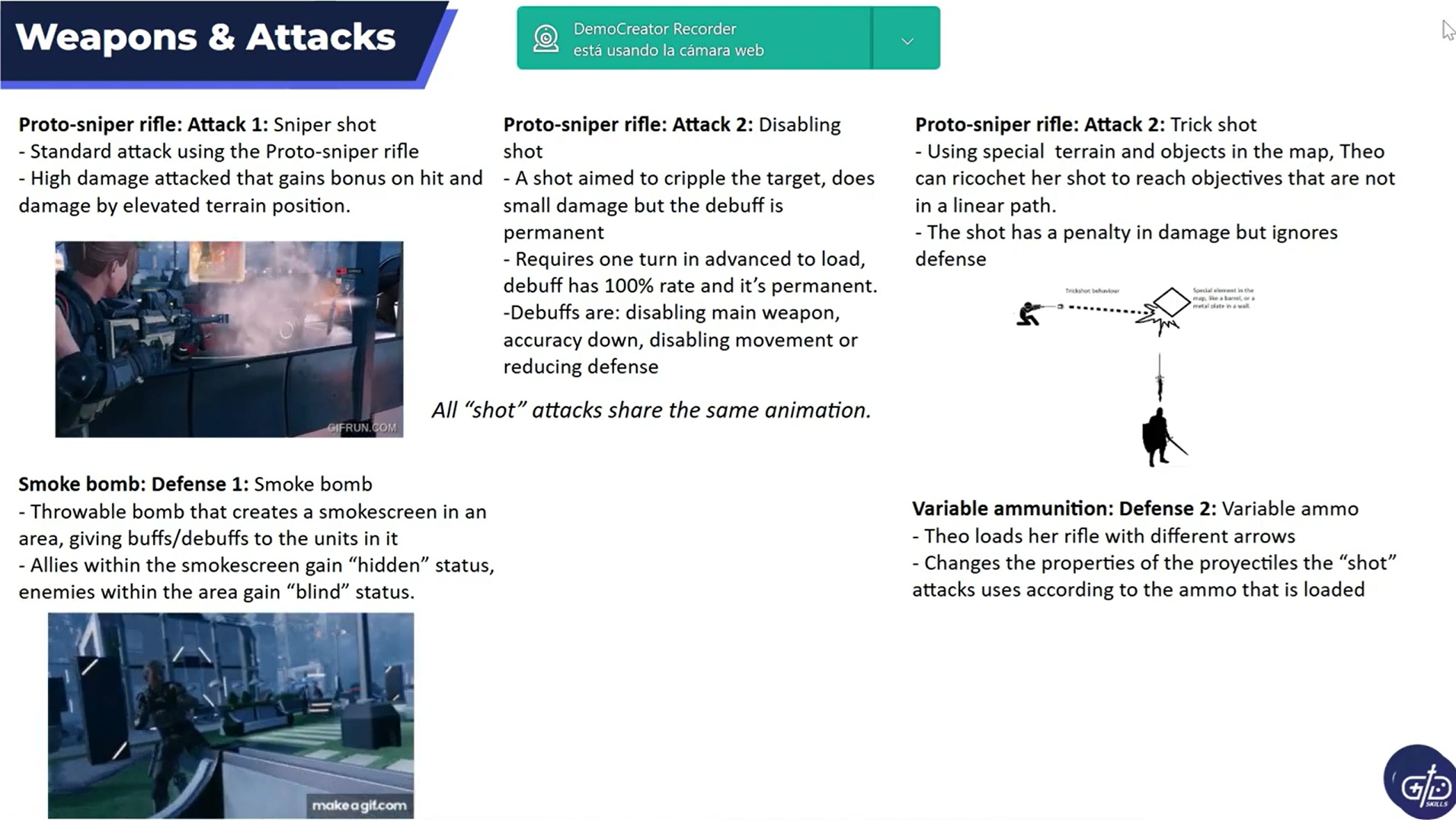
Attacks
Theodora was created as the cool stoic character of the team; a marksman focused on honing her craft. She’s designed to avoid stereotypical tropes of female characters, such as being sexualized, weak of character, air headed or validation seeking.
Inspired by iconic female characters such as Ripley and Corporal Ferro from the Aliens movie, and Ana from Overwatch. Theo is confident in her skills and used to be recognized by it, she’s targeting the appeal of female players mainly.
Her design favors mobility, stealth and easy handling of her arsenal. Showing her commitment to her role. Her appearance is not sexy, cute or overly fashionable, as it doesn’t follow her personality.
Her arsenal and tools are designed for long range combat and support.
Enemy NPC: Merlin
Design
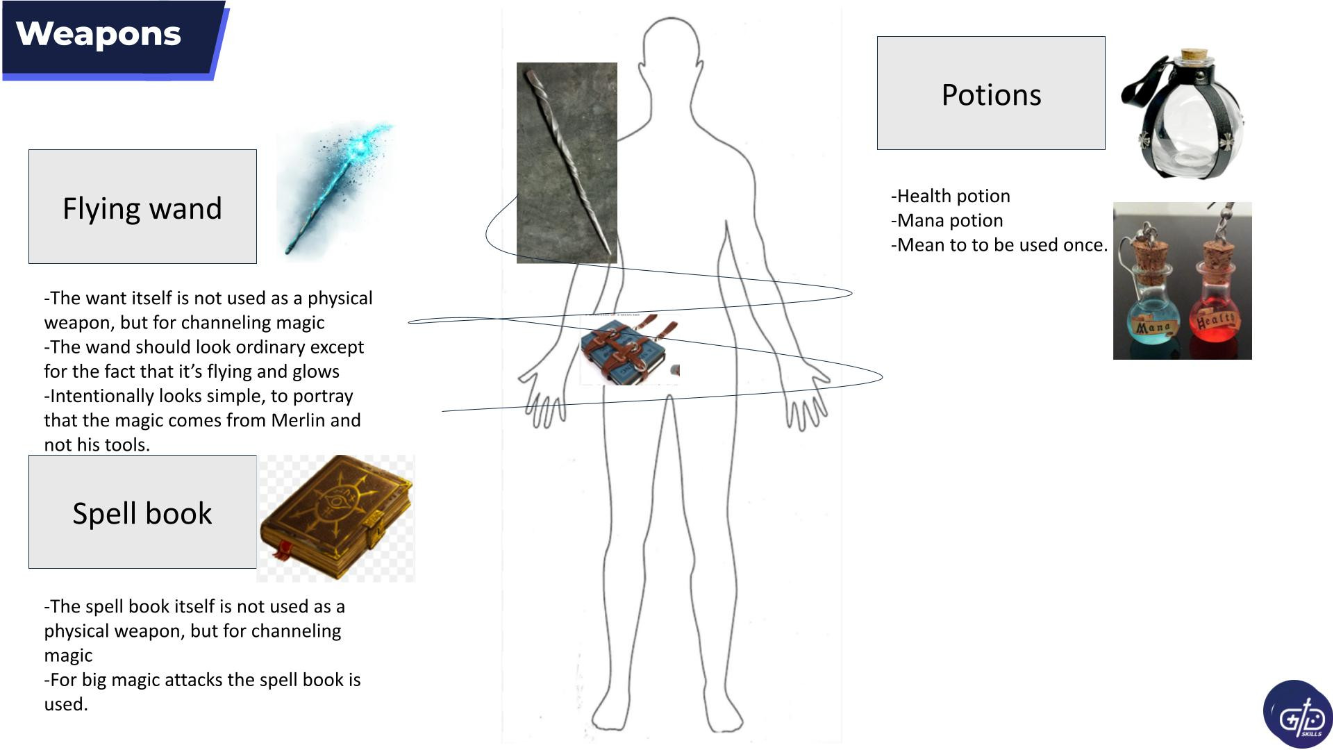
Weapons
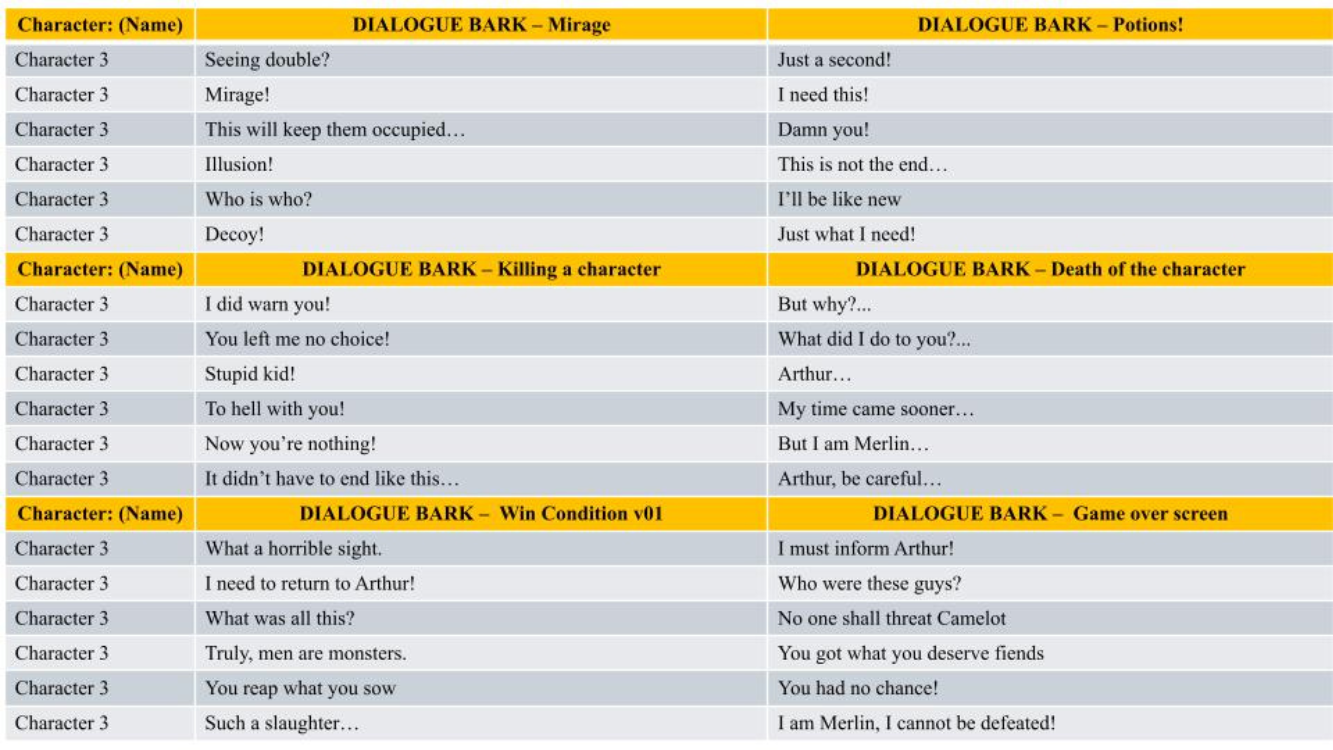
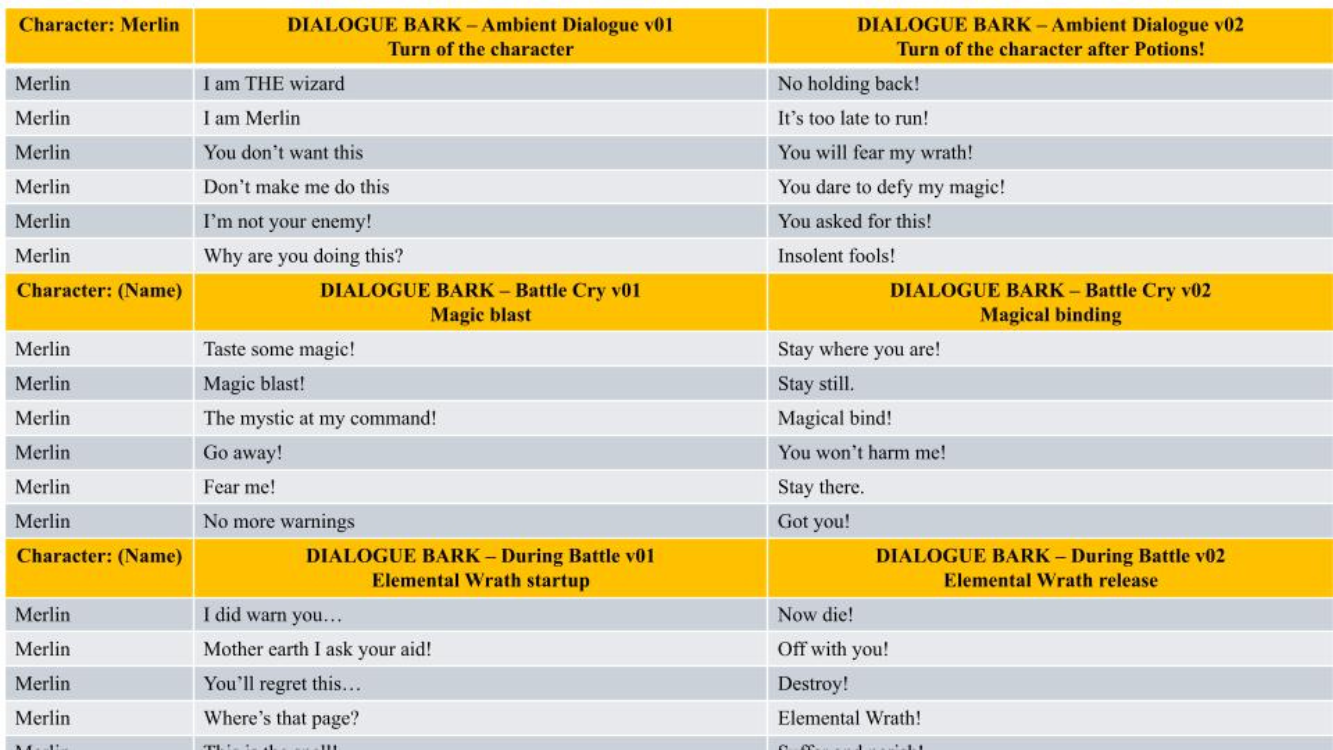
Barks
Attacks
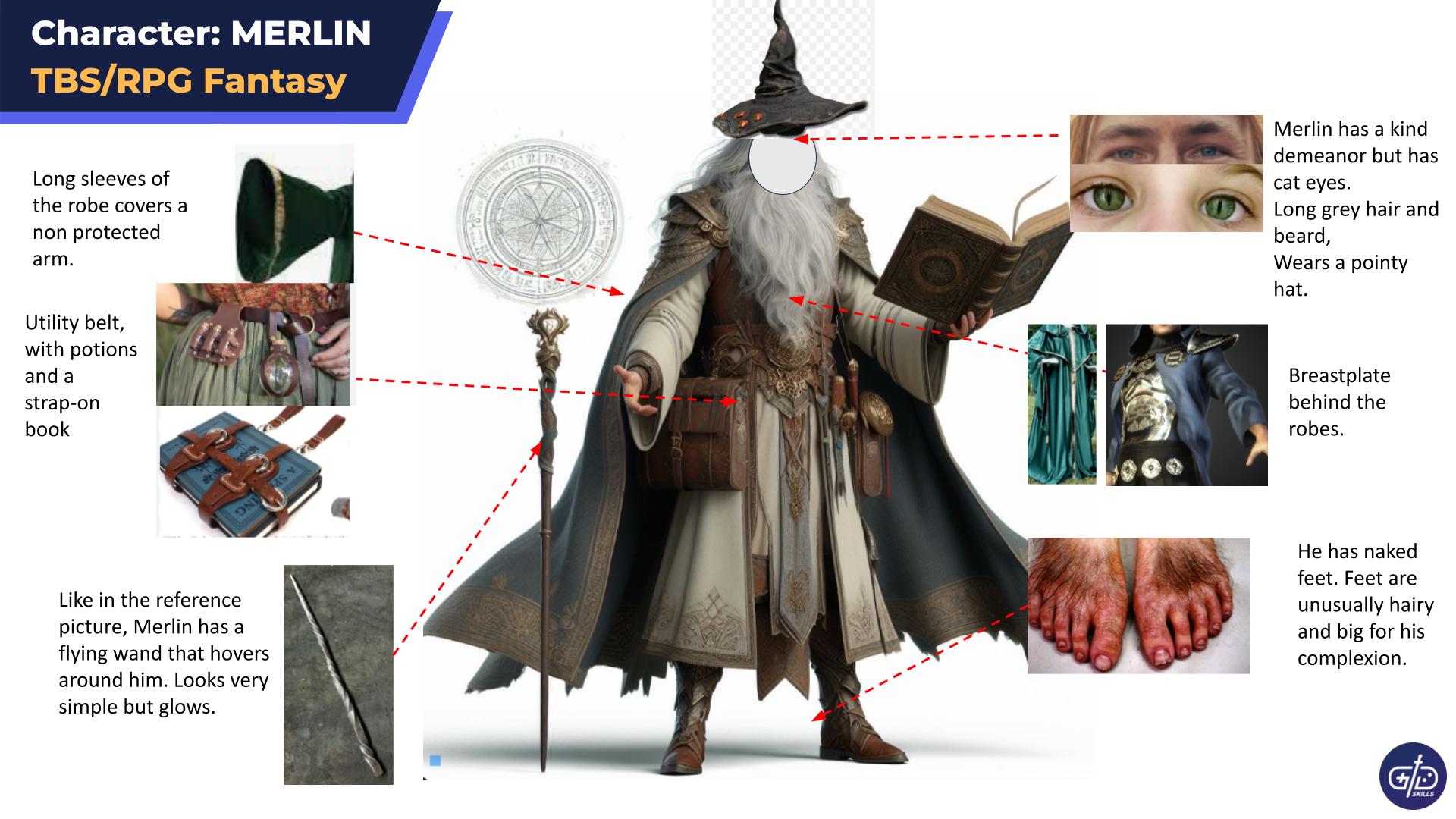
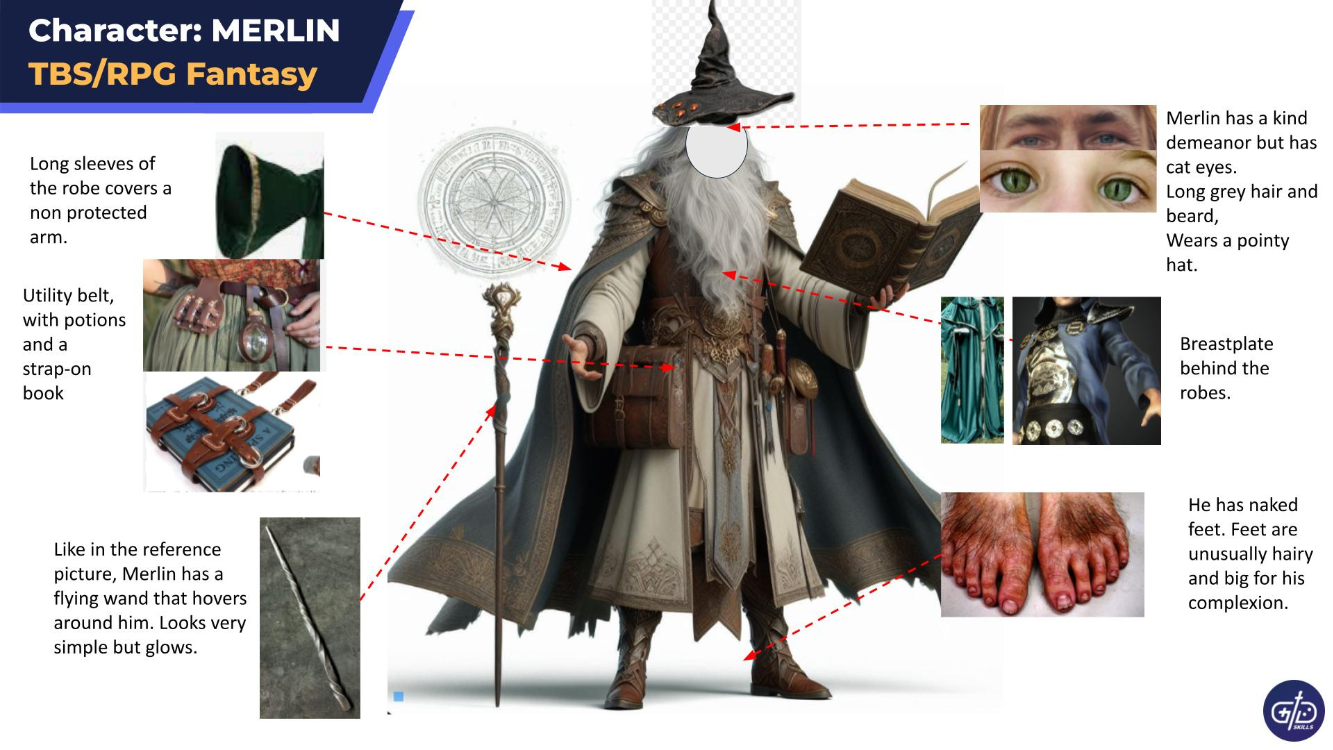
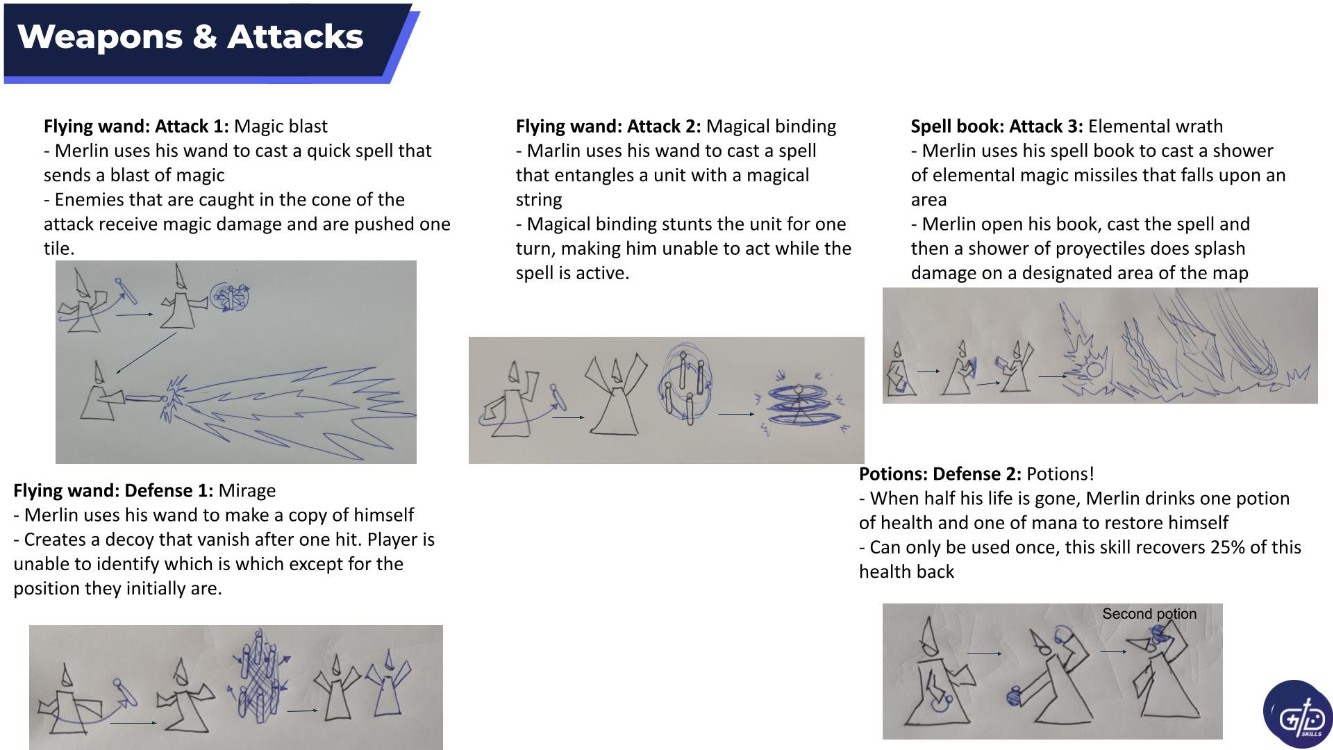
Merlin was designed as the character that anchors the player in the myths of the game. To help the player adapt to this world, I borrowed and adapted common real-world stories from Merlin of the King Arthur legend into the character lore.
The character was designed to have recognizable features of the most popular characterizations of Merlin in other media but adding certain aspects that make him strange and unsettling (example the child like cat eyes and the big hairy naked feet).
Merlin is one of the antagonists but is not a “bad guy”, which is something that emphasizes the theme of the game, that is that “fear is the unknown and we fight the unknown due to fear”.
Merlin moveset was drafted on paper, due to the behaviors that the wand has during the spells. This is because his personality is reflected in the movements of his flying wand during the casting of the spells, so it was important to portray its uniqueness clearly.
Storyboarding & Trailer Script Writing
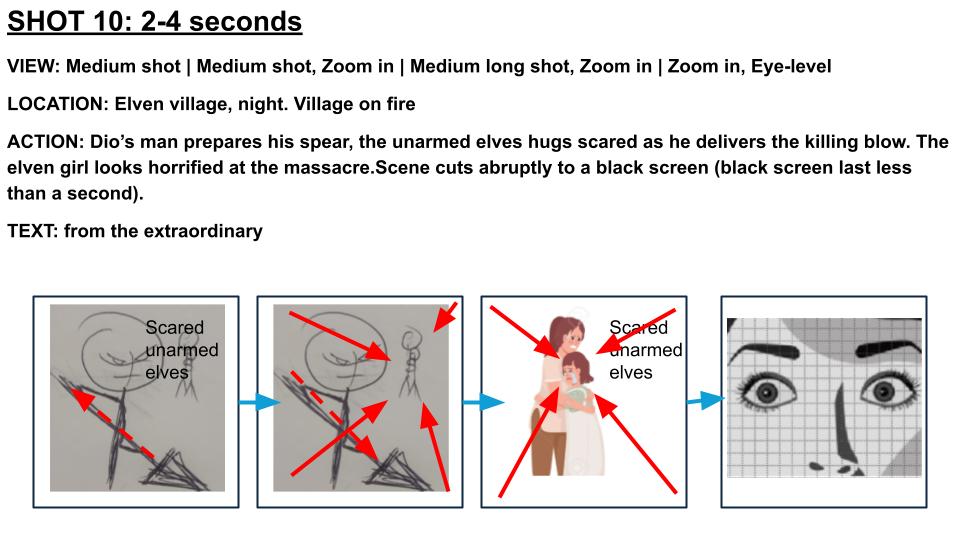
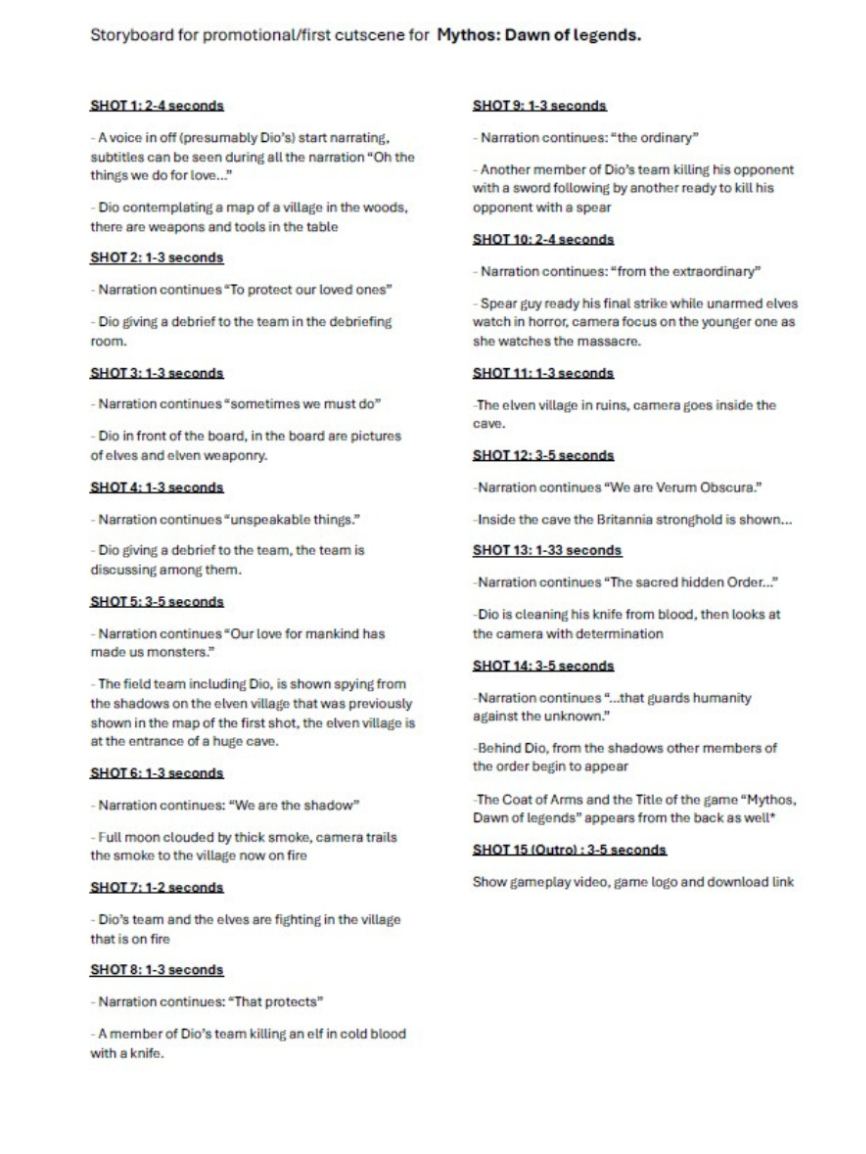
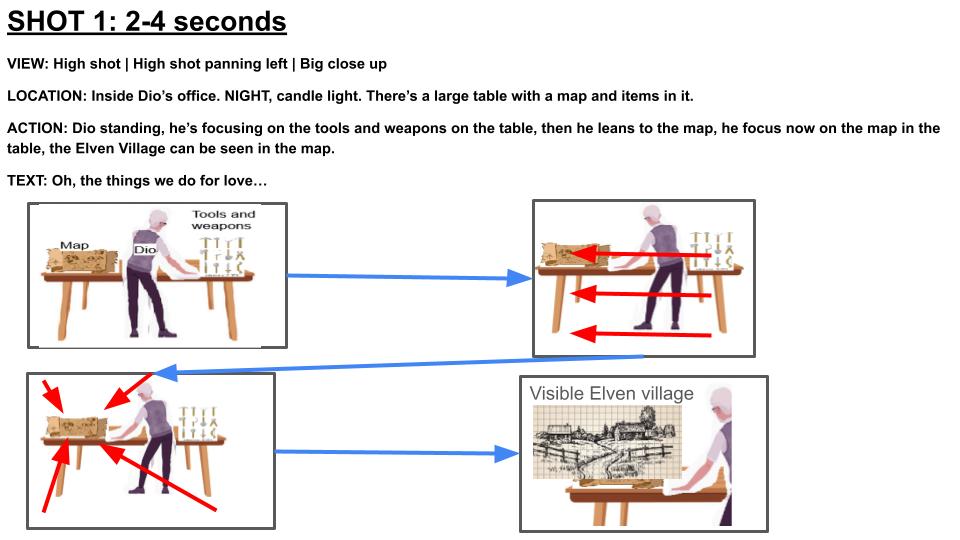
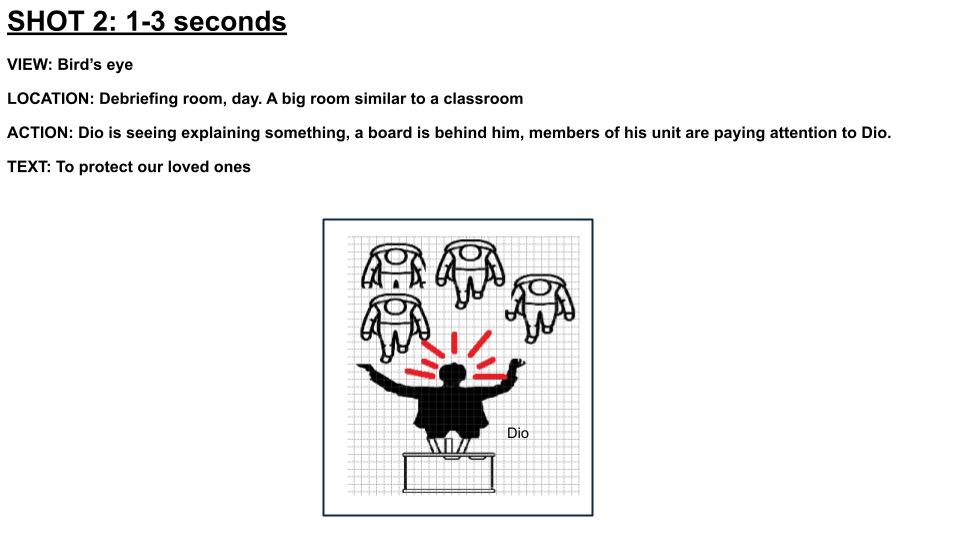
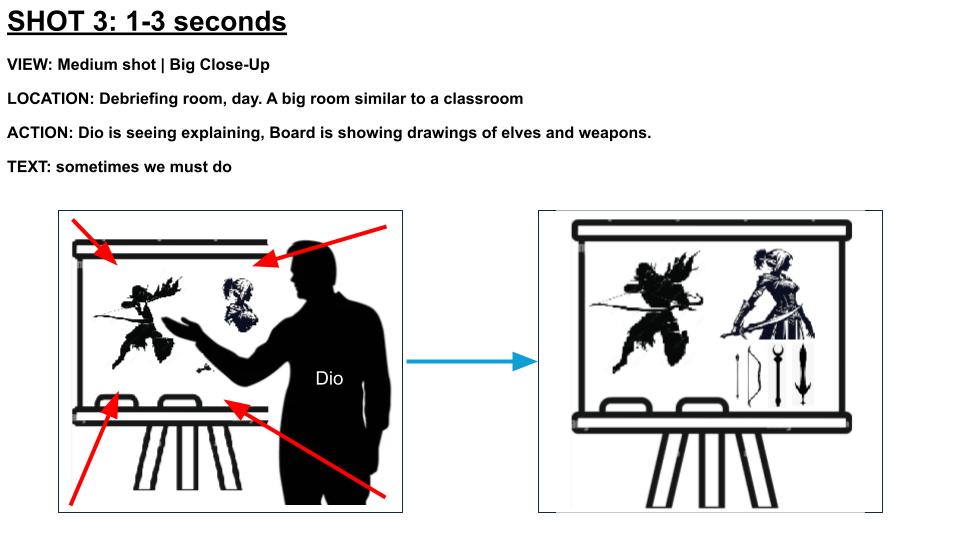
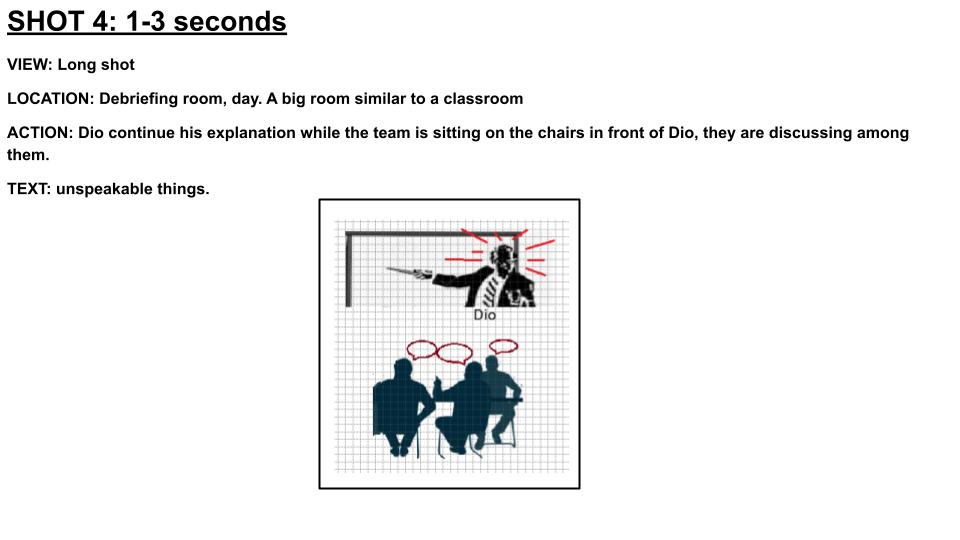
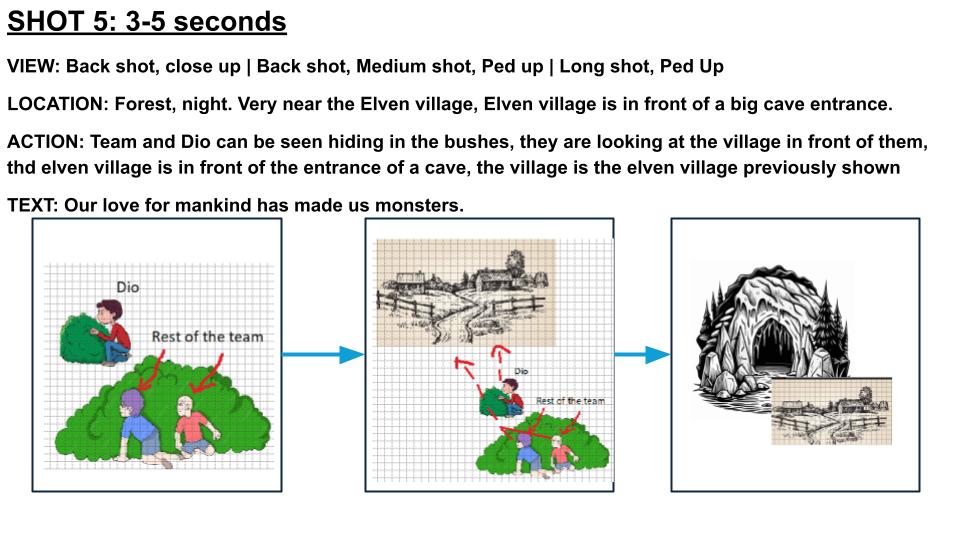
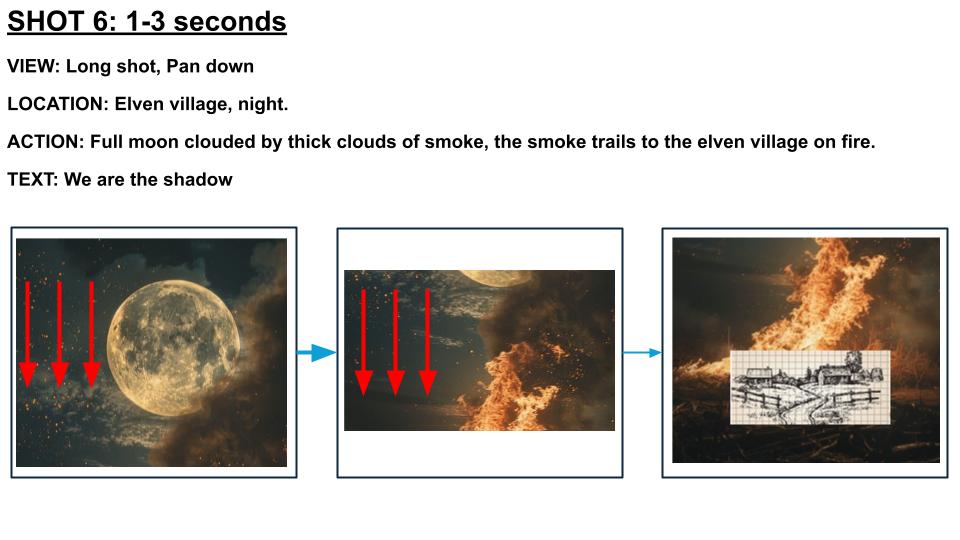
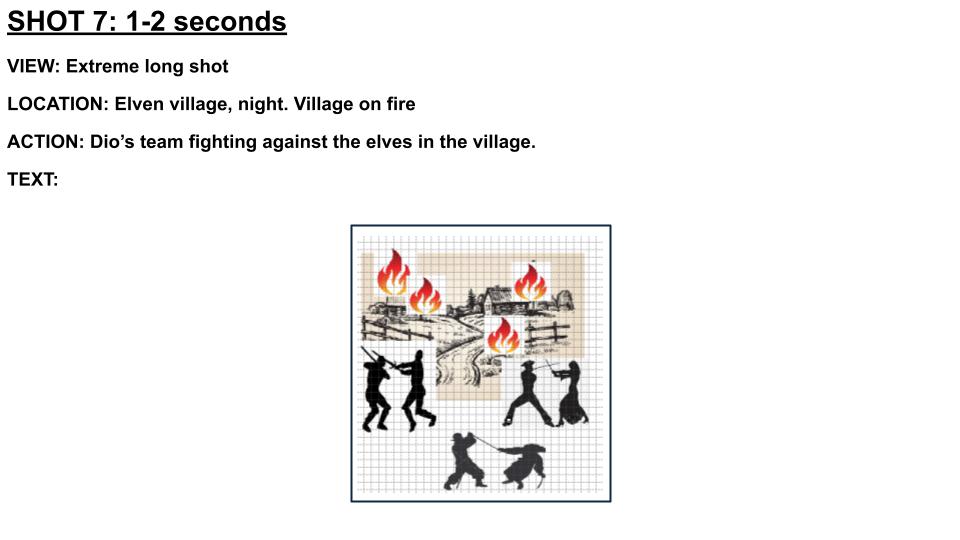
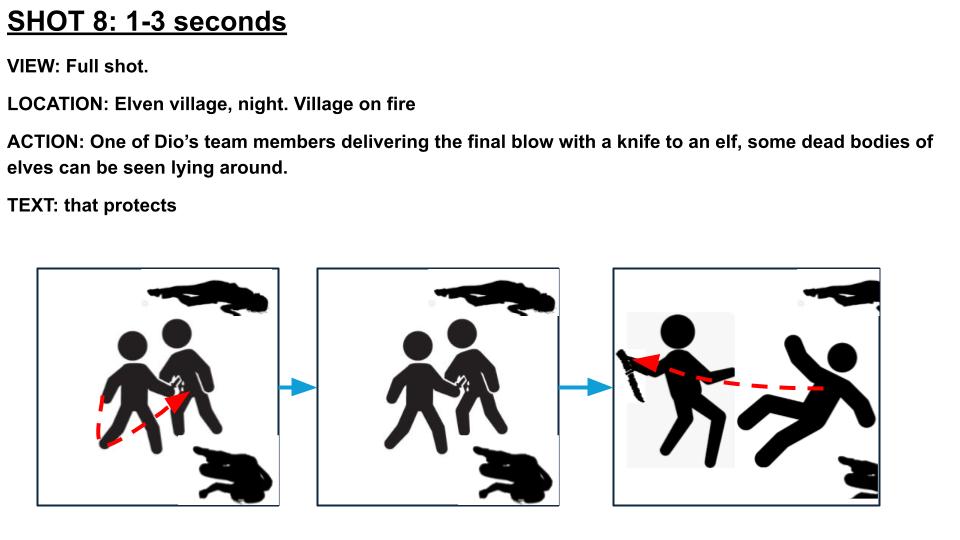
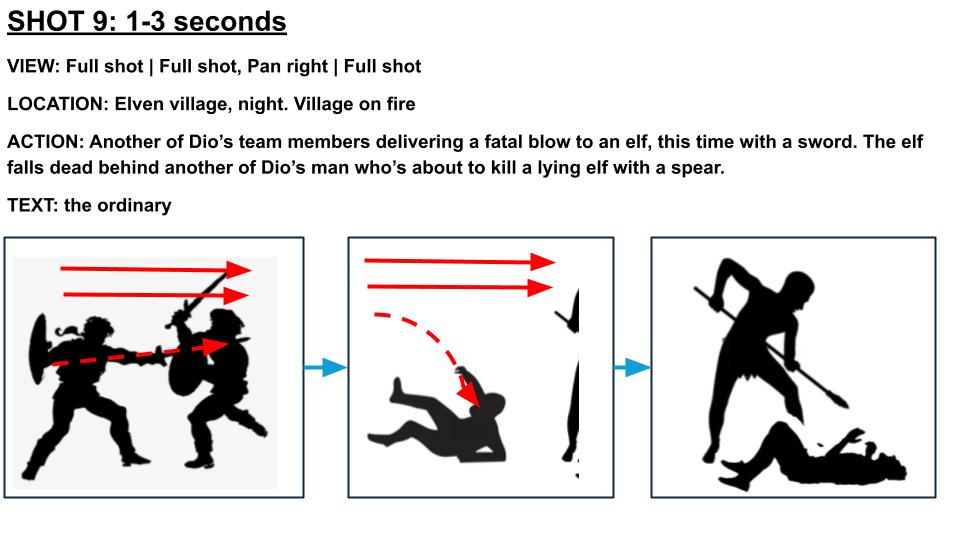
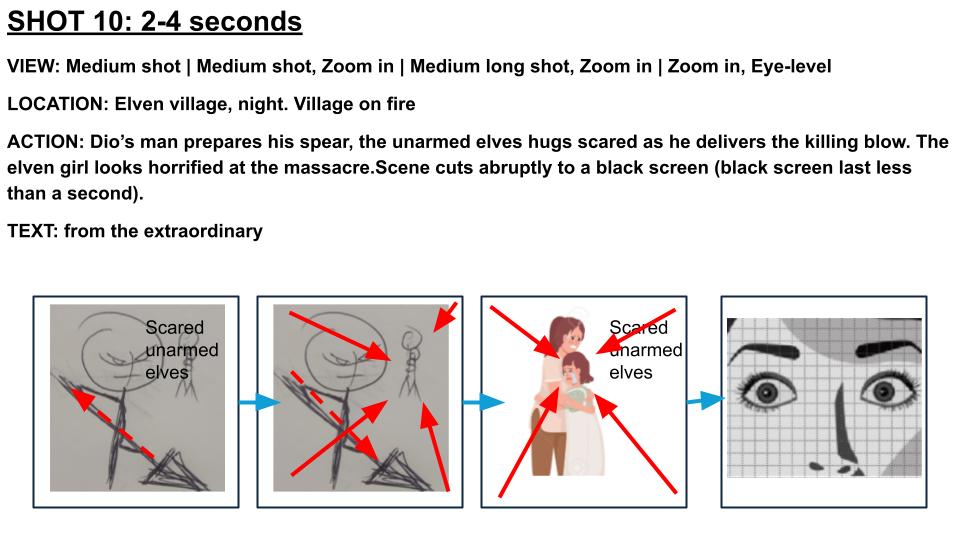
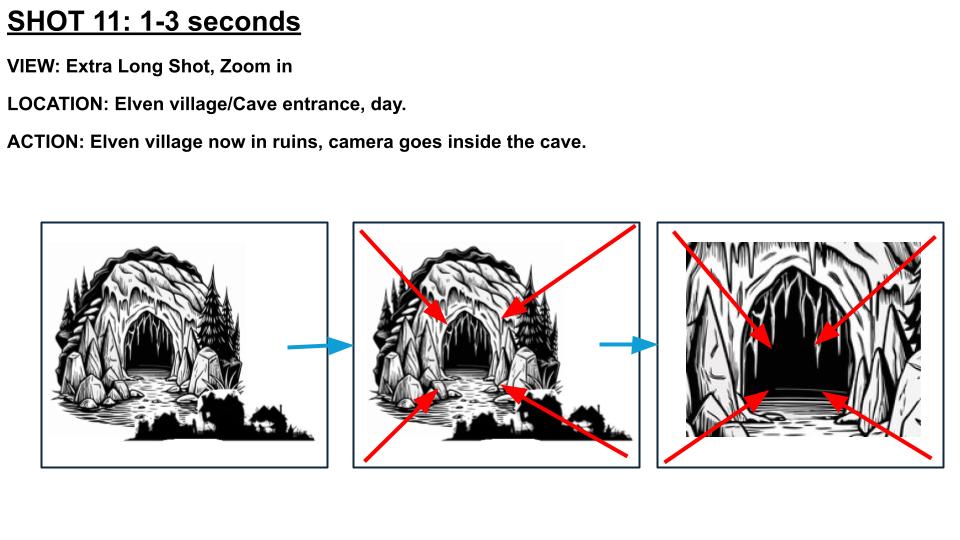
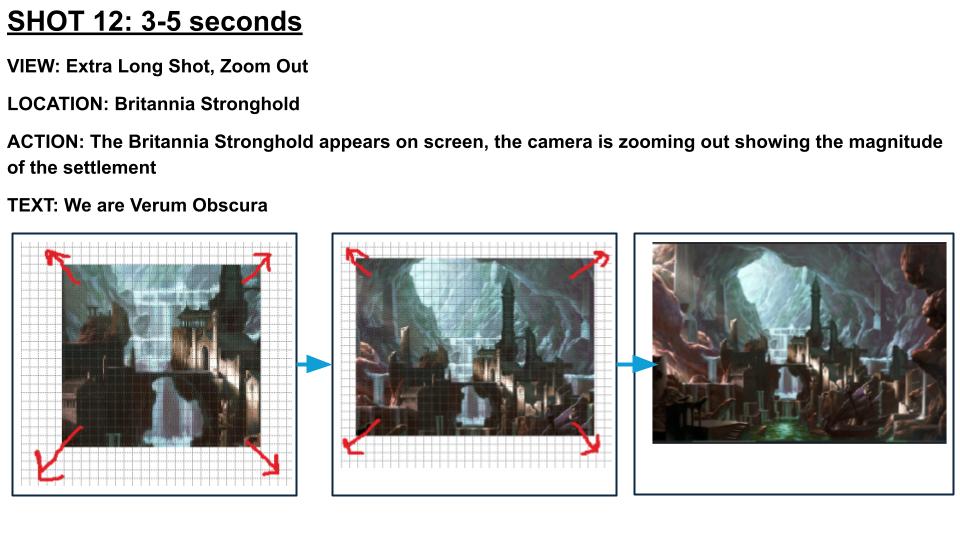
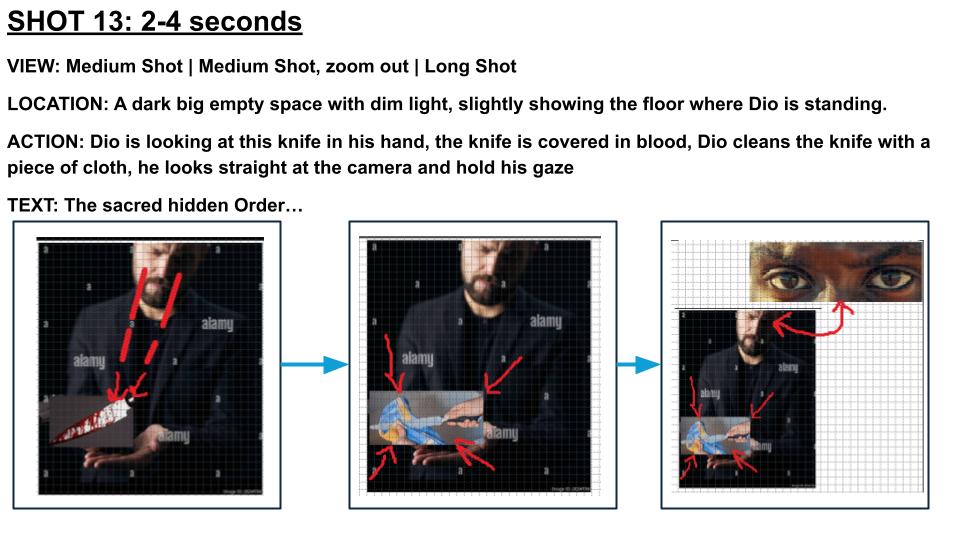
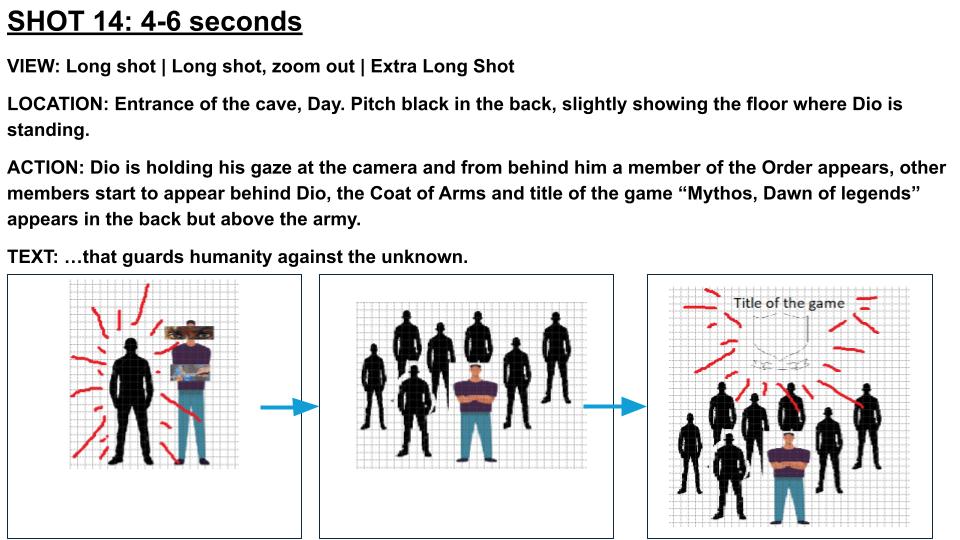
I designed a storyboard to convey shots for the opening/trailer cutscene for the title
Described shots with specific camera angles and locations for shots
Provided shots with accompanying images to assist designers along with action descriptions
Additionally provided text to that describes in-game lore and details the overarching story
Voice Over Documentation
I worked on localization notes and the Spanish transcription, I did the actor casting and voice over docs.
Objectives:
Organization though the master script and voice actor casting sheets.
Refine each character’s information for casting.
Provide voice acting notes for actors.
Worldbuilding
(↓ Hover on the tooltips to view the building designs)
1
2
4
5
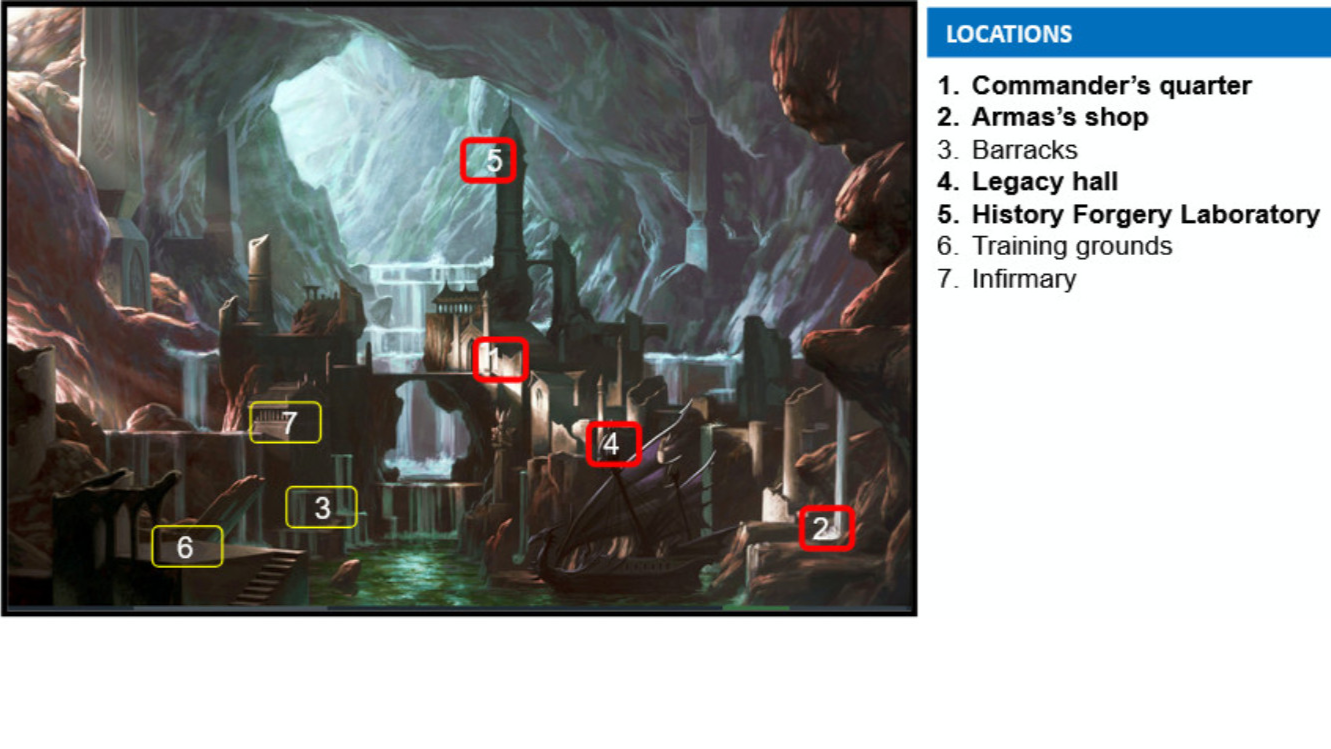
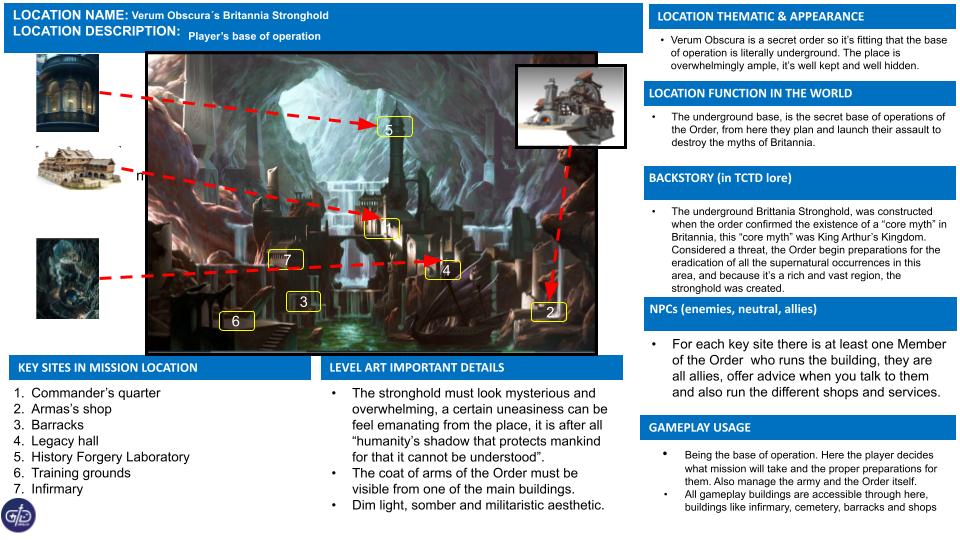
Fleshed Out The Locations for The Map
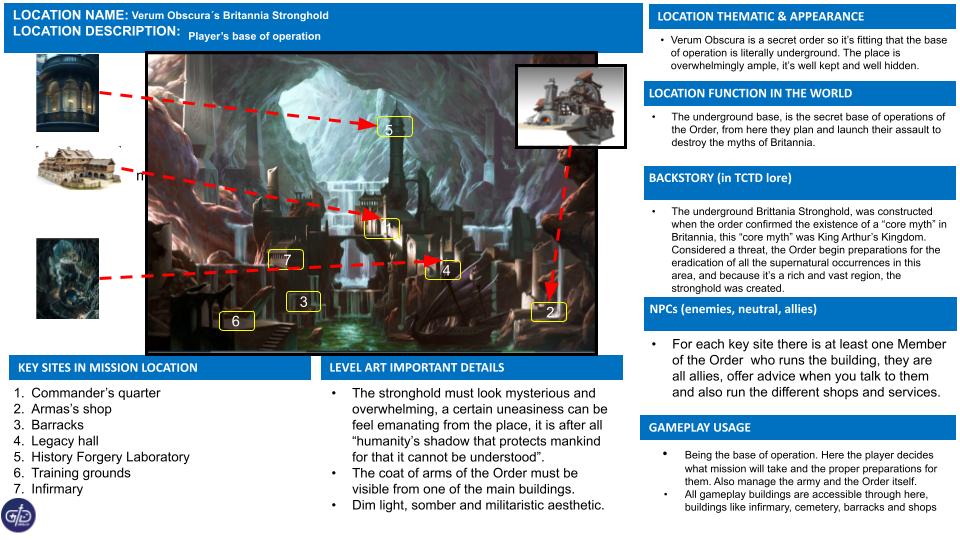
I created a main hub based on the Stronghold of Britannia where player learn core mechanics, lore and grow stronger. Which has several purposes like:
Ensured player development and safety through a central hub that serves as a peaceful recurring sanctuary.
Designed environmental storytelling to enhance gameplay and lore
Introduces core game mechanics and tutorials.
Access to key buildings and characters for the progression of the game.
Build a cohesive, immersive world that incentivizes exploration
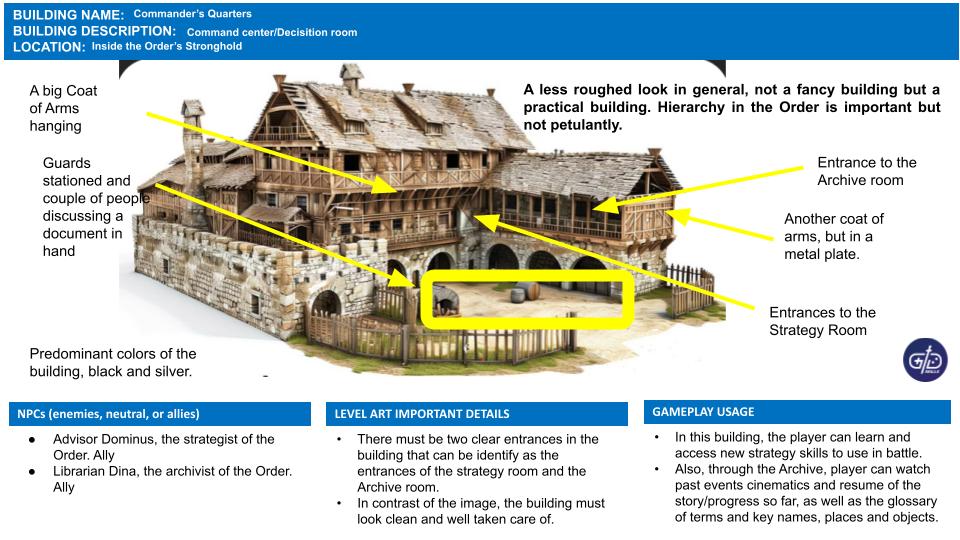
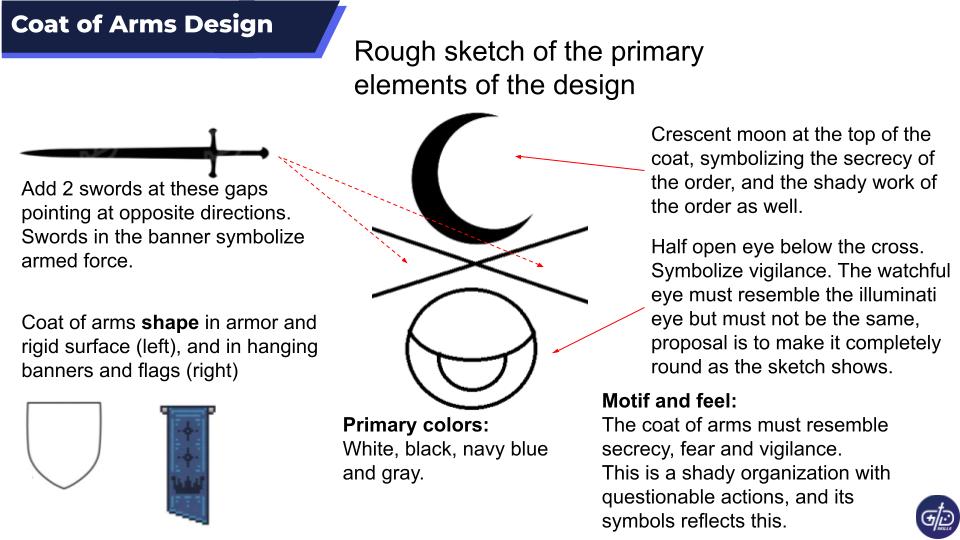
Designed a draft for the Coat of Arms for the buildings and units.
It was designed to portray the motif and feel of “Verum Obscura” Order, the army which the Main Character is part of.
Added the shapes in rigid surfaces and hanging banners,
Simple symbology, that can be easily understood in the context of the game.
All details have a description that justify its inclusion.
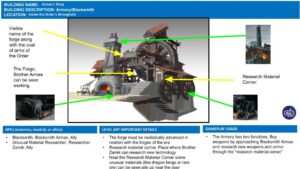
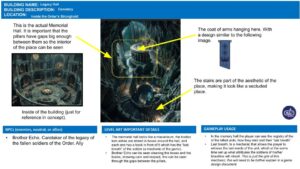
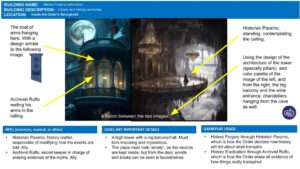
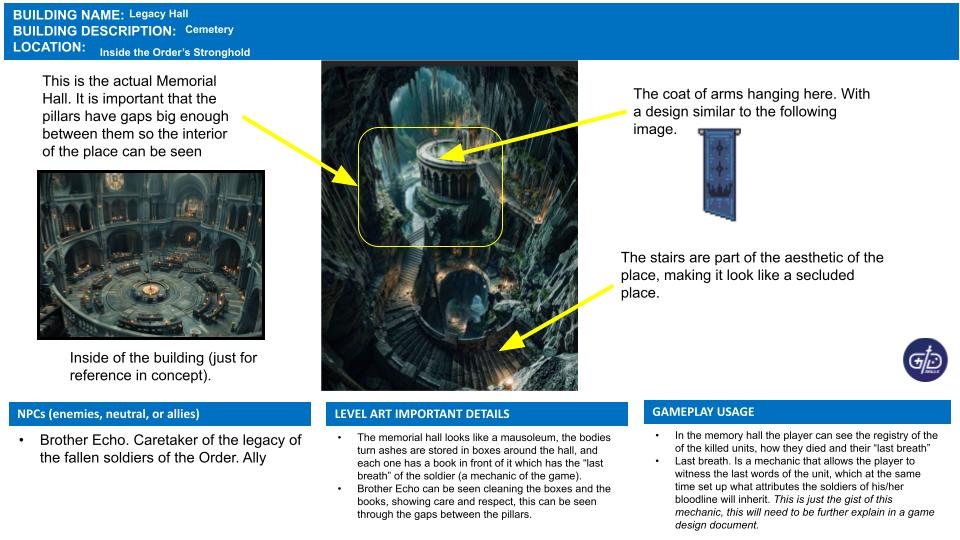
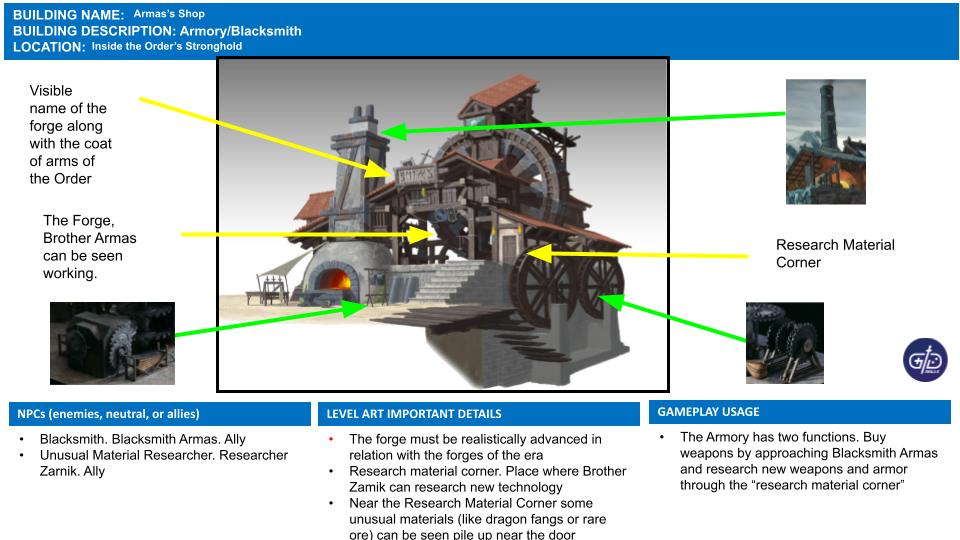
Worked on several location designs created for the use and interaction of the player.
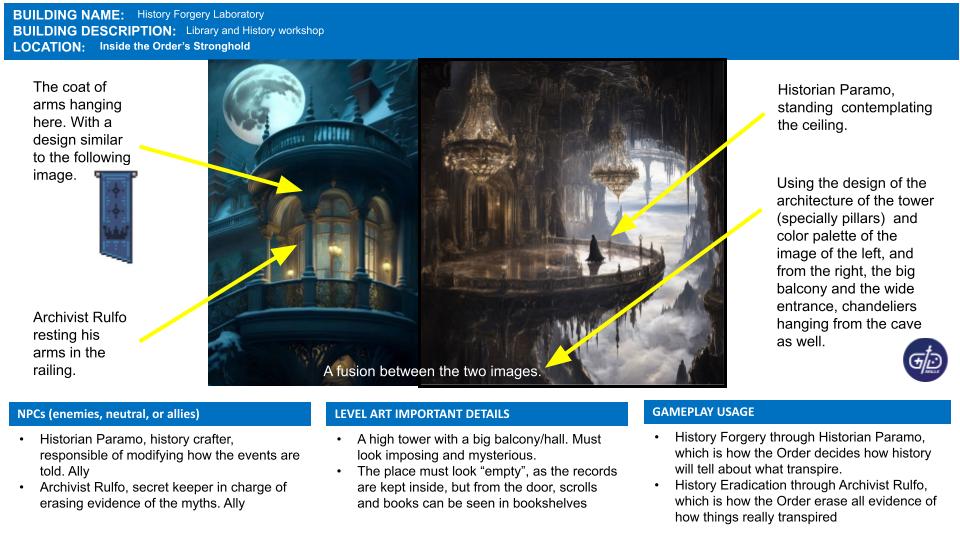
Worked on several location designs created for the use and interaction of the player.
Worked on several location designs created for the use and interaction of the player.
Worked on several location designs created for the use and interaction of the player.
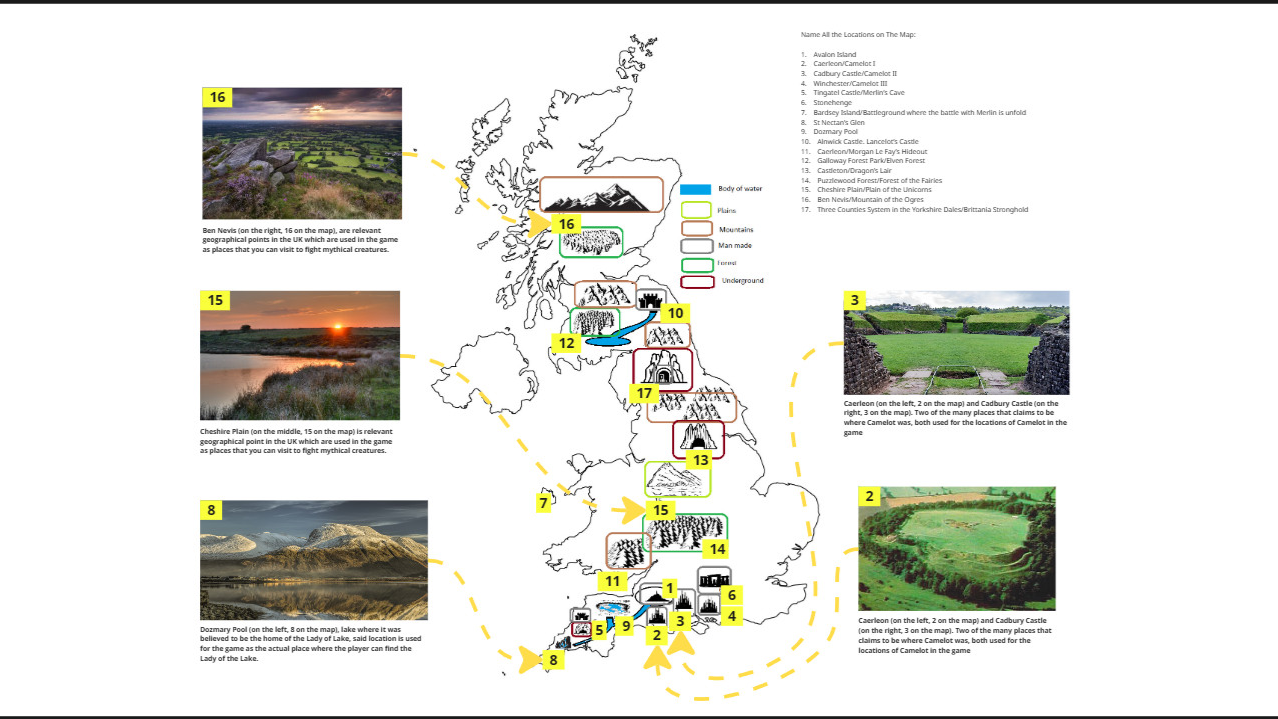
Designed the (LOCATION)'s Cartography
I designed this map to highlight key mission locations and is designed to reflect Arthurian legends by referencing real-world geography tied to the myth:
Arthurian Research – Real-world sites like Camelot and Merlin’s Cave inspired mission locations.
Lore Coherence – Puzzlewood Forest houses mystical creatures due to its folkloric ties.
Multiple Camelots – Three possible Camelot locations reflect real-world claims. Designed so that players conquer two false sites (each with a Round Table Knight) before finding the real one.
Player Stronghold – Set in the largest cave system to support the fantasy of a large stronghold hidden in a cave.
Map Simplification – Non-essential geography removed to keep focus on key areas. All the places included in the map are located in geographical points of relevancy.
Biomes – Diversity of biomes and architecture based on the environments of real England, this research included the creation of moodboards.
Genre and Content Research
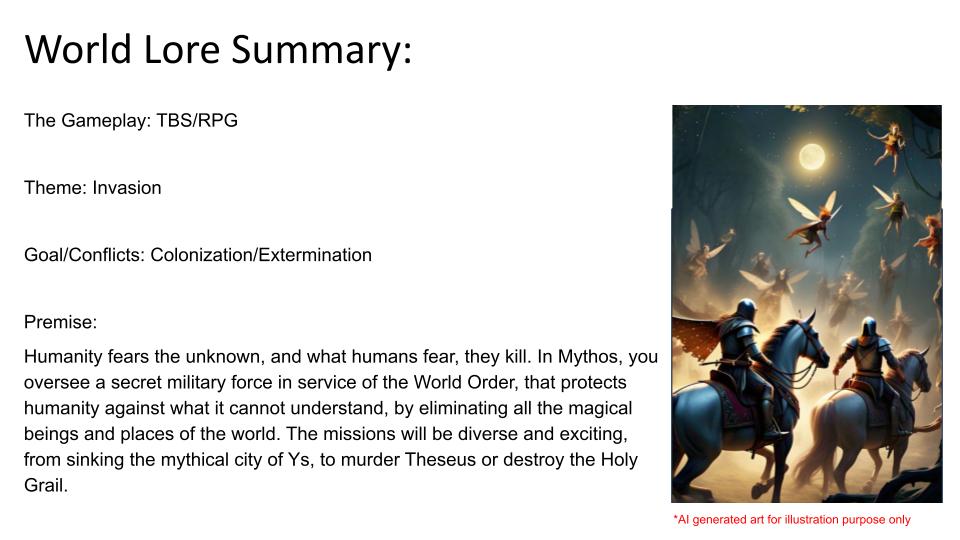
I develop an intriguing and engaging premise for the game, and designed the overarching story and lore of the game with a cohesive and engaging world that players can explore, interact with and discover through in-game lore, dialogue and events.
For this I researched several high grossing media including movies, comics, video games and music. And carefully crafted an universe where popular legends and fantasy from the real world took place and had a direct involvement in the game world.
This World Lore Summary served several purposes:
Precisely show the uniqueness and engagement of the premise.
Stay within the confines of the genre.
Enhance player accessibility and immersion.
Pinpoint the strengths and opportunities of the concept.
Skip To...
Add a header to begin generating the table of contents